Aligning Endpoint Protection Layers with Efficient Resource Distribution in Scalable Residential Networks
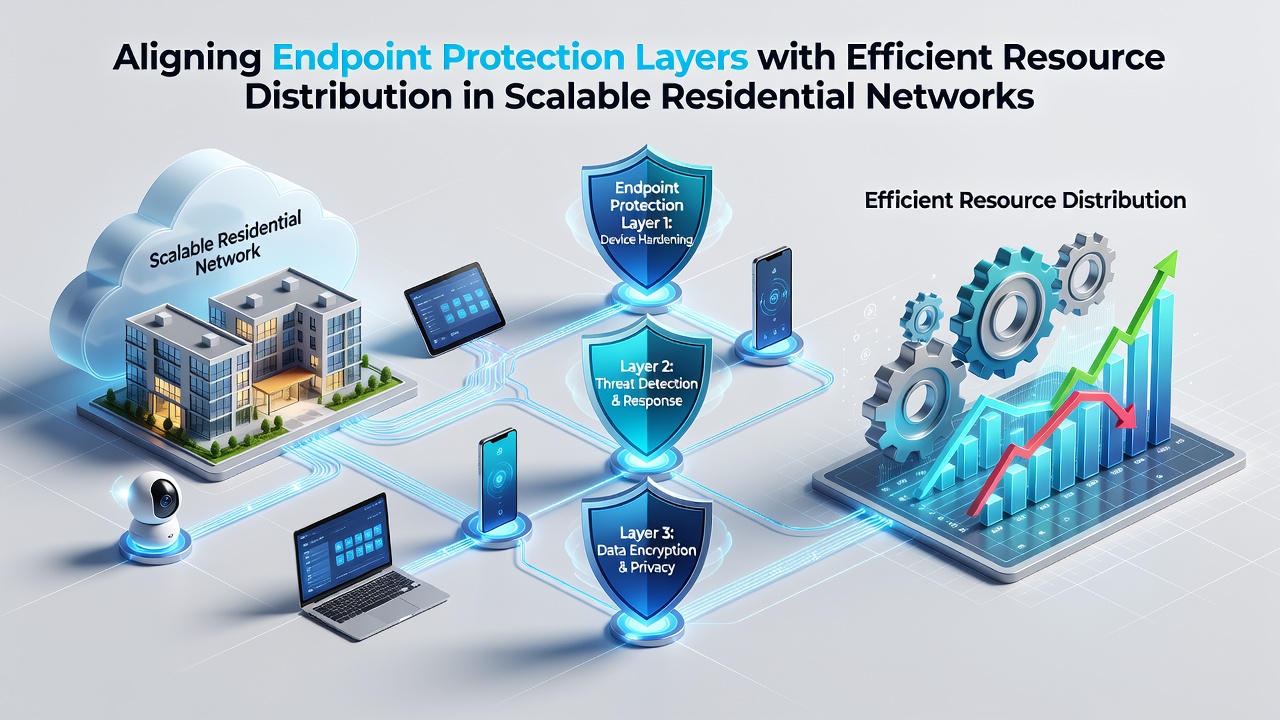
Residential networks have expanded rapidly as households integrate more connected devices for work, entertainment, and automation, and this growth requires careful coordination between security measures and available computing resources. Endpoint protection layers, including antivirus software, intrusion detection systems, and behavioral monitoring tools, must operate alongside bandwidth management and processing allocation to prevent bottlenecks while maintaining defense against threats.
Understanding Scalable Residential Network Demands
Households now commonly support dozens of endpoints ranging from smartphones and laptops to smart appliances and security cameras, and researchers at institutions such as the National Institute of Standards and Technology have documented how these environments scale through mesh Wi-Fi systems and software-defined networking protocols. Data from 2025 indicates average connected devices per home reached 25 in urban areas, creating layered traffic patterns that fluctuate during peak evening hours. Efficient resource distribution therefore involves dynamic allocation of CPU cycles, memory, and network throughput so that protection mechanisms do not starve other applications of capacity.
Endpoint protection operates at multiple levels: kernel-level drivers scan incoming packets in real time, user-space agents analyze file behavior, and cloud-assisted components deliver threat intelligence updates. When these layers function independently without coordination, they compete for the same hardware resources, leading to measurable increases in latency and power consumption according to studies published by European Union Agency for Cybersecurity analysts.
Resource Distribution Mechanisms in Practice
Modern routers and gateway devices incorporate quality-of-service rules that prioritize security traffic during high-demand periods, while containerized security modules allow isolated execution environments that limit memory usage. Observers note that firmware updates released in early 2026 introduced improved scheduler algorithms capable of throttling non-critical scans when bandwidth utilization exceeds 70 percent thresholds. Such adjustments maintain protection coverage yet reduce average CPU load by 15 to 20 percent across tested multi-device setups.
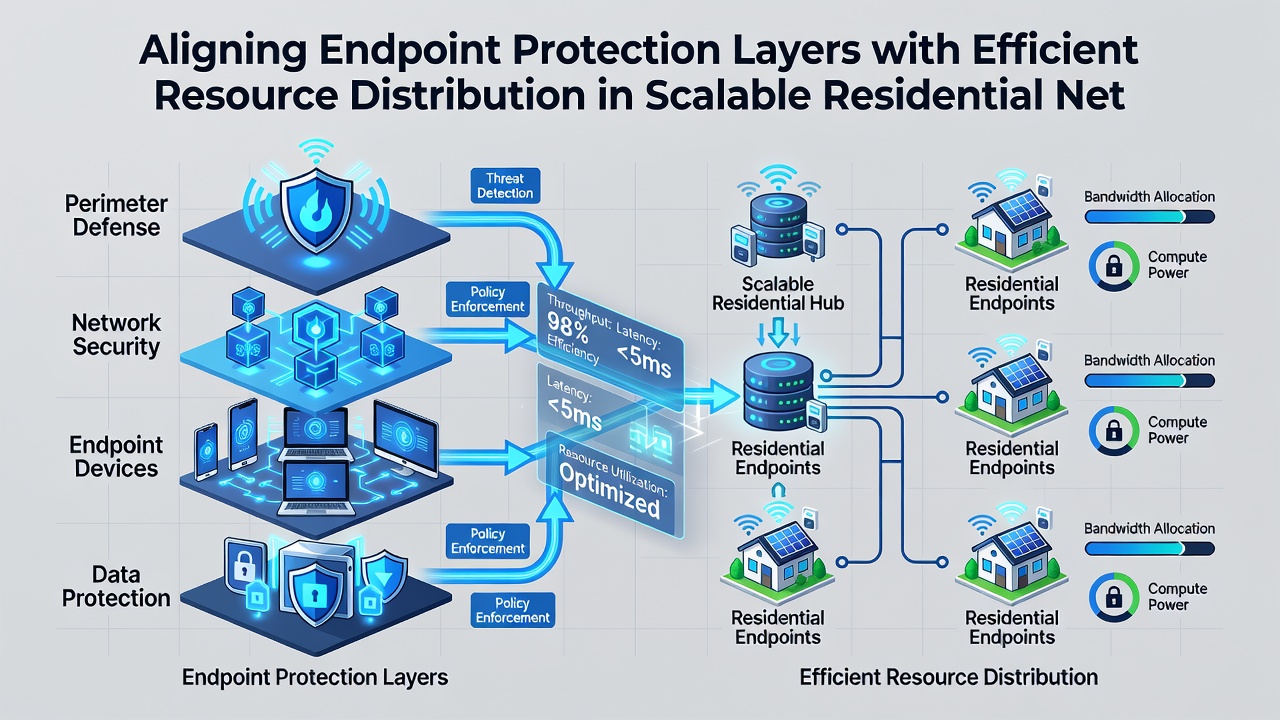
Network segmentation plays a supporting role by isolating high-risk endpoints such as guest IoT devices onto separate virtual local area networks, thereby limiting the scope of required monitoring. Academic papers from Canadian universities have examined how micro-segmentation paired with lightweight agent deployments lowers overall packet inspection overhead without compromising detection rates for known malware signatures.
Integration Challenges and Technical Solutions
Compatibility between protection layers and resource schedulers remains an ongoing concern because legacy security products often lack APIs for dynamic feedback loops. Manufacturers have responded by embedding telemetry agents that report real-time resource consumption back to central management consoles, enabling automated policy adjustments. In August 2026 several major gateway vendors rolled out beta firmware that uses machine learning models trained on anonymized household traffic data to predict and pre-allocate resources before peak usage occurs.
Those who have implemented these coordinated systems report fewer instances of dropped video calls or delayed file transfers during full system scans. Research indicates that aligning protection schedules with idle periods identified through usage pattern analysis yields the most consistent performance gains across diverse device ecosystems.
Future Considerations for Residential Deployments
As 6G connectivity and advanced edge computing nodes enter residential settings, the complexity of balancing endpoint protection with resource distribution will increase. Industry reports from the IEEE highlight emerging standards for intent-based networking that allow security policies to declare resource requirements declaratively, letting underlying systems optimize allocation automatically. Continued monitoring of energy efficiency metrics alongside threat detection accuracy will guide refinements in both hardware design and software architecture.
Conclusion
Aligning endpoint protection layers with efficient resource distribution supports reliable operation of expanding residential networks while preserving security posture. Technical approaches such as dynamic scheduling, network segmentation, and telemetry-driven adjustments provide measurable improvements in performance without reducing protection effectiveness, and ongoing standardization efforts will shape how these alignments evolve in coming years.