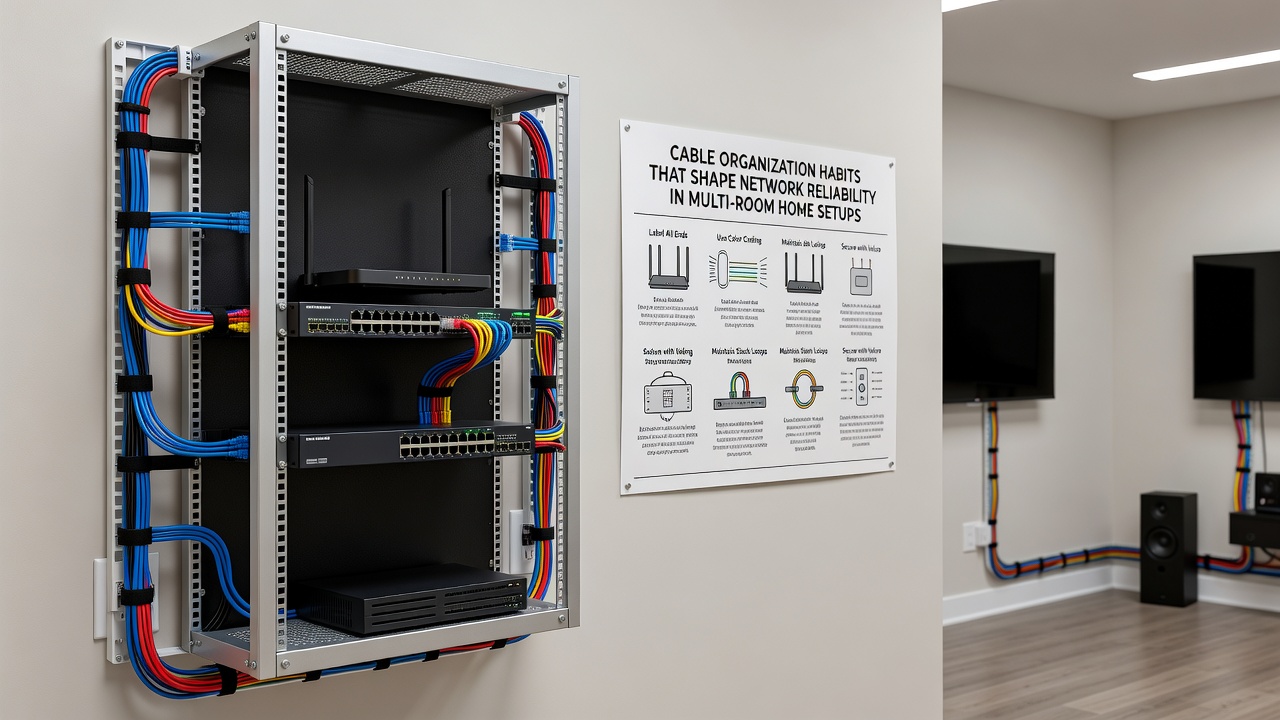
Cable Organization Habits That Shape Network Reliability in Multi-Room Home Setups
Research indicates that structured cable management directly influences signal integrity across distributed home networks, particularly when devices span multiple rooms adn rely on both wired and wireless connections. Observers note that households adopting systematic routing practices experience fewer packet losses and reduced latency spikes compared to those with haphazard arrangements. Data from industry reports shows that electromagnetic interference rises sharply when data cables run parallel to power lines without proper separation, a common issue in expanded residential layouts. Those who've studied residential networking patterns find that consistent labeling forms the foundation for troubleshooting efficiency. Technicians often report that color-coded tags and documented pathways cut diagnostic time by significant margins during outages. In setups where multiple switches and access points connect through shared conduits, clear identification prevents accidental disconnections that cascade into broader reliability drops.Routing Practices That Minimize Interference
Experts have observed that maintaining physical distance between Ethernet runs and electrical wiring reduces crosstalk and noise accumulation. Studies reveal that even short parallel stretches can introduce measurable degradation in gigabit connections when cables remain bundled without barriers. People often find that using dedicated pathways or shielded conduits helps isolate signals, especially in homes where renovations have created complex wall cavities.
What's interesting is how vertical versus horizontal routing affects long-term performance. Gravity and building movement tend to shift loosely secured cables over time, creating tension points that stress connectors. Research shows that securing cables at regular intervals with appropriate fasteners prevents these gradual shifts while allowing for thermal expansion in warmer months.
Accessory Choices and Their Measured Impact
Figures reveal that cable ties applied with excessive force can deform outer jackets on twisted-pair wiring, altering impedance characteristics. Those who've examined failure patterns recommend hook-and-loop fasteners for data lines because they distribute pressure more evenly. Industry guidelines from organizations like the FCC electromagnetic compatibility resources emphasize separation standards that many residential installers now reference when planning multi-room expansions.
Conduit systems and raceways provide additional protection in high-traffic areas. Data indicates that homes incorporating these elements see lower rates of physical damage from furniture movement or foot traffic. In July 2026, updated residential wiring assessments highlighted how flexible management solutions adapted better to evolving device counts than rigid trunking in older properties.
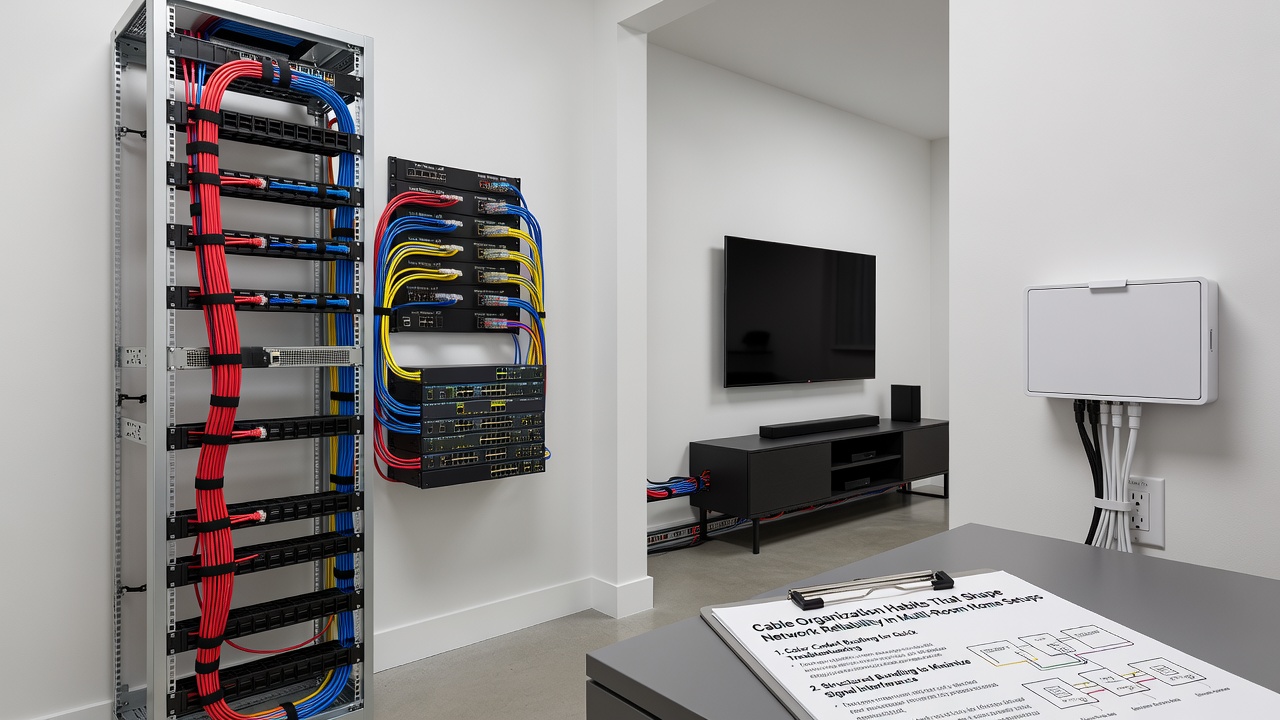
Maintenance Routines That Sustain Performance
Regular inspection cycles help identify early signs of wear before they affect connectivity. Observers note that households scheduling quarterly checks catch issues such as loosened terminations or accumulated dust that restricts airflow around switches. Research indicates that proactive replacement of aging patch cables maintains consistent throughput across rooms where bandwidth demands fluctuate with streaming and remote work loads.
Documentation updates during these reviews ensure that new devices integrate without disrupting established pathways. Experts have observed that maintaining an inventory of cable lengths and types simplifies future upgrades, reducing the likelihood of mismatched components that introduce bottlenecks.
Adaptations for Evolving Device Clusters
Multi-room environments increasingly incorporate smart appliances and IoT sensors alongside traditional computers. Those who've tracked connectivity trends note that dedicated low-voltage runs for these devices prevent them from sharing pathways with high-speed data cables. This separation limits the potential for interference that grows as device density rises.
Power distribution units with integrated cable management features further organize the environment. Reports show that centralized power routing combined with data cable segregation correlates with fewer unexplained drops in mesh network performance. Australian Communications and Media Authority guidelines on residential electromagnetic environments provide additional reference points for installers working in regions with dense housing.
Conclusion
Systematic cable organization emerges as a measurable factor in network stability when homes expand across multiple rooms. Practices such as proper separation, secure fastening, and ongoing documentation support consistent performance even as device numbers and usage patterns shift. Evidence continues to link these habits with reduced interference and faster recovery from disruptions, establishing them as foundational elements rather than optional refinements in contemporary residential networking.