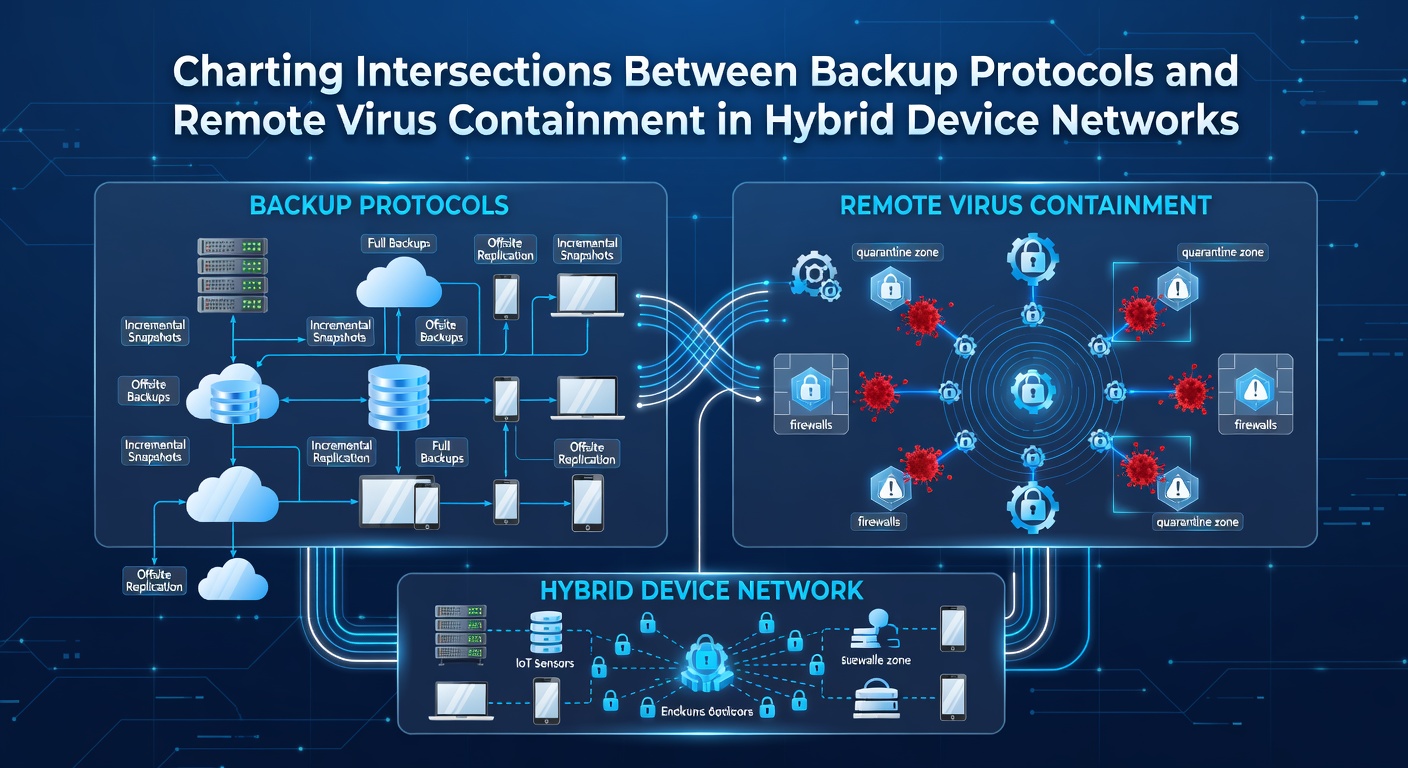
Charting Intersections Between Backup Protocols and Remote Virus Containment in Hybrid Device Networks
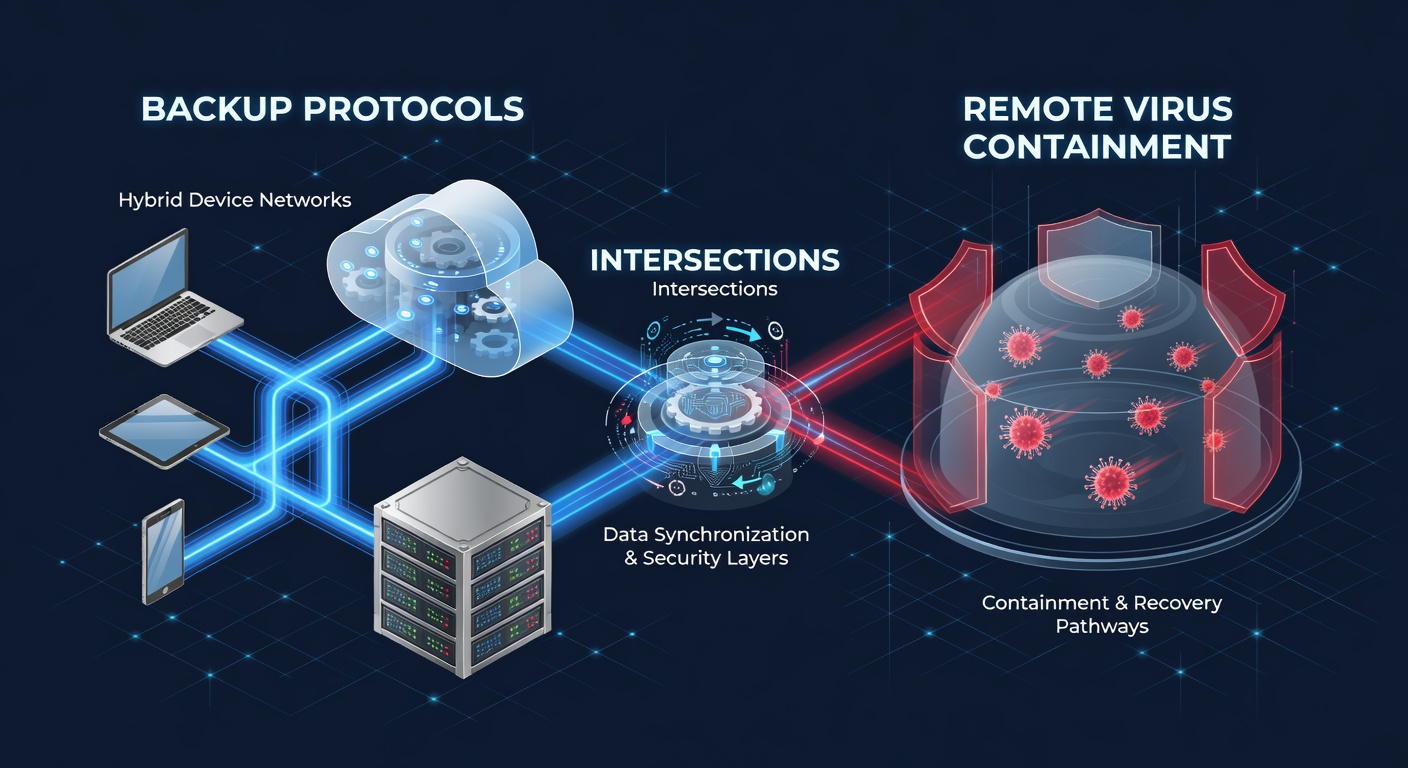
Hybrid device networks bring together endpoints from laptops and smartphones to servers and IoT sensors across on-premises and cloud environments, and backup protocols intersect with remote virus containment by enabling restoration points that support threat isolation without disrupting broader operations. Organizations manage these intersections through coordinated strategies that link data preservation with real-time threat response mechanisms.
Core Elements of Hybrid Device Networks
Hybrid setups connect devices running multiple operating systems and connection types, which creates pathways for data flows that backup systems must account for during routine operations. Remote containment tools operate by segmenting network traffic and applying access controls, while backup protocols maintain versioned copies that allow rollback after detection events occur. Data shows that such networks often incorporate automated monitoring layers that flag anomalies before they propagate across mixed device clusters.
Backup Protocols in Practice
Protocols like incremental and differential backups track changes across hybrid nodes, and they integrate encryption standards that protect stored data from unauthorized access during transfer or retention periods. The 3-2-1 rule guides many implementations where three copies exist on two different media types with one stored offsite, and this approach supports containment by preserving clean snapshots that avoid infected versions. Research from academic sources indicates that snapshot-based systems in virtualized environments reduce recovery windows when paired with network segmentation tactics.
Remote Virus Containment Mechanisms
Containment relies on centralized consoles that push isolation commands to affected devices while scanning for malware signatures across connected segments. These tools often leverage behavioral analysis to quarantine suspicious activity without halting legitimate traffic flows in real time. According to reports from the Australian Cyber Security Centre, containment effectiveness increases when systems maintain synchronized logs that backup processes can reference for verification after an incident.
Where Protocols and Containment Overlap
Backup systems contribute to containment by allowing administrators to restore devices from pre-infection states while the network maintains quarantined zones for further analysis. Automated scripts can trigger backups immediately upon anomaly detection, and this creates reference points that support forensic review without exposing clean environments to residual threats. Observers note that hybrid networks benefit when backup schedules align with containment policies, such as pausing replication during active isolation periods to prevent spread through shared storage.
Standards bodies including the National Institute of Standards and Technology have outlined frameworks that tie data resilience directly to incident response workflows. In May 2026 updates to related guidelines emphasized automated validation checks between backup integrity scans and remote containment triggers, which helps organizations coordinate these functions across distributed device fleets. Case examples from enterprise deployments reveal that integrated platforms reduce downtime by using backup metadata to confirm device status before reconnection occurs.
Implementation Considerations Across Device Types
Different device categories demand tailored approaches where mobile endpoints use cloud-synced backups that align with mobile threat defense layers, whereas server clusters employ local snapshots combined with network-level firewalls. Those who manage these systems find that policy engines enforce rules that link backup frequency to threat levels detected in specific network zones. Evidence from industry reports shows that mismatches between backup retention and containment timelines can leave gaps that allow re-infection during restoration sequences.
Challenges in Coordinated Operations
Latency in hybrid connections can delay backup acknowledgments needed for containment decisions, and encryption overhead sometimes conflicts with rapid scanning requirements during threat events. Solutions often involve prioritized queues that handle critical data first while deferring less urgent replication tasks. Researchers discovered through controlled tests that cross-protocol compatibility issues arise most frequently in environments mixing legacy hardware with modern cloud services.
Conclusion
Effective management of hybrid device networks requires backup protocols and remote virus containment to operate as interconnected components rather than isolated functions. Data from various monitoring initiatives continues to highlight how aligned strategies support faster recovery and reduced exposure across diverse device ecosystems. Organizations track these intersections through ongoing protocol refinements that adapt to evolving network architectures and threat landscapes.