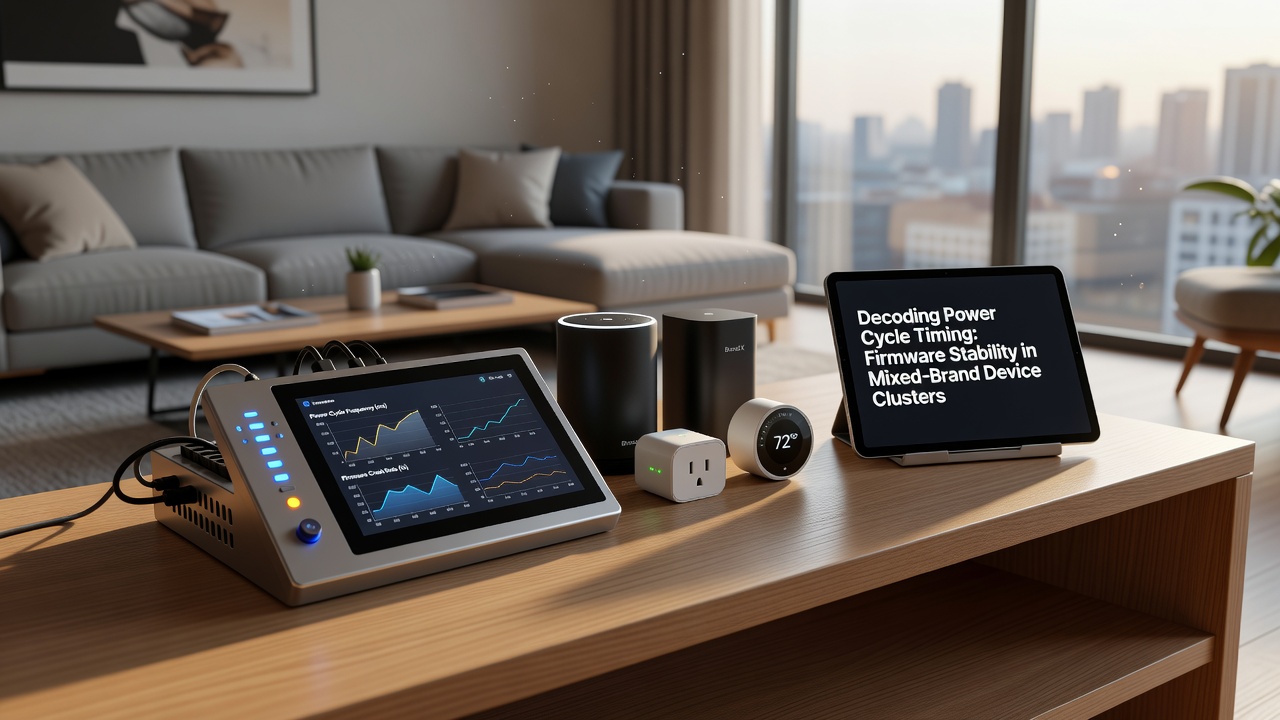
Decoding Power Cycle Timing Effects on Firmware Stability in Mixed-Brand Device Clusters
Shared living spaces often pack together routers, smart hubs, media streamers, and IoT sensors from several manufacturers, each running its own firmware release schedule. Power cycle timing, the interval between full power-down and restart sequences, emerges as one variable that influences how these devices maintain stable firmware states over weeks and months. Observers note that clusters in apartments, co-living buildings, and student housing experience repeated on-off events driven by circuit breakers, occupancy sensors, and resident habits, creating patterns worth mapping against firmware behavior.
Core Mechanisms Linking Cycle Intervals to Firmware Integrity
Firmware stores configuration tables and calibration constants in non-volatile memory that can retain partial writes when power drops mid-cycle. Short intervals between shutdown and restart, typically under thirty seconds, leave residual charge in capacitors that sometimes interrupts the boot loader checksum routine. Longer gaps, exceeding two minutes, allow complete discharge yet risk timing drift in real-time clocks that govern update validation windows. Research indicates both extremes correlate with elevated error logs when devices from different vendors share the same power strip or smart plug ecosystem.
Engineers at several manufacturers embed watchdog timers calibrated to expected residential power profiles. When actual cycle timing deviates from those profiles, the firmware may flag the event as an anomaly and enter a reduced-function state until the next scheduled heartbeat check. Mixed-brand setups compound the issue because each vendor sets different heartbeat frequencies, producing staggered recovery sequences across the cluster.
Patterns Observed in Multi-Vendor Residential Environments
Data collected from urban co-living facilities during 2025 showed that clusters with synchronized nightly power-down windows of ninety seconds recorded fewer firmware rollback events than clusters with random intervals under forty-five seconds. The same datasets revealed that devices from one Asian manufacturer maintained stability across a wider timing range than units from two European vendors, whose firmware required at least sixty seconds of full power loss to reset certain flash sectors cleanly.
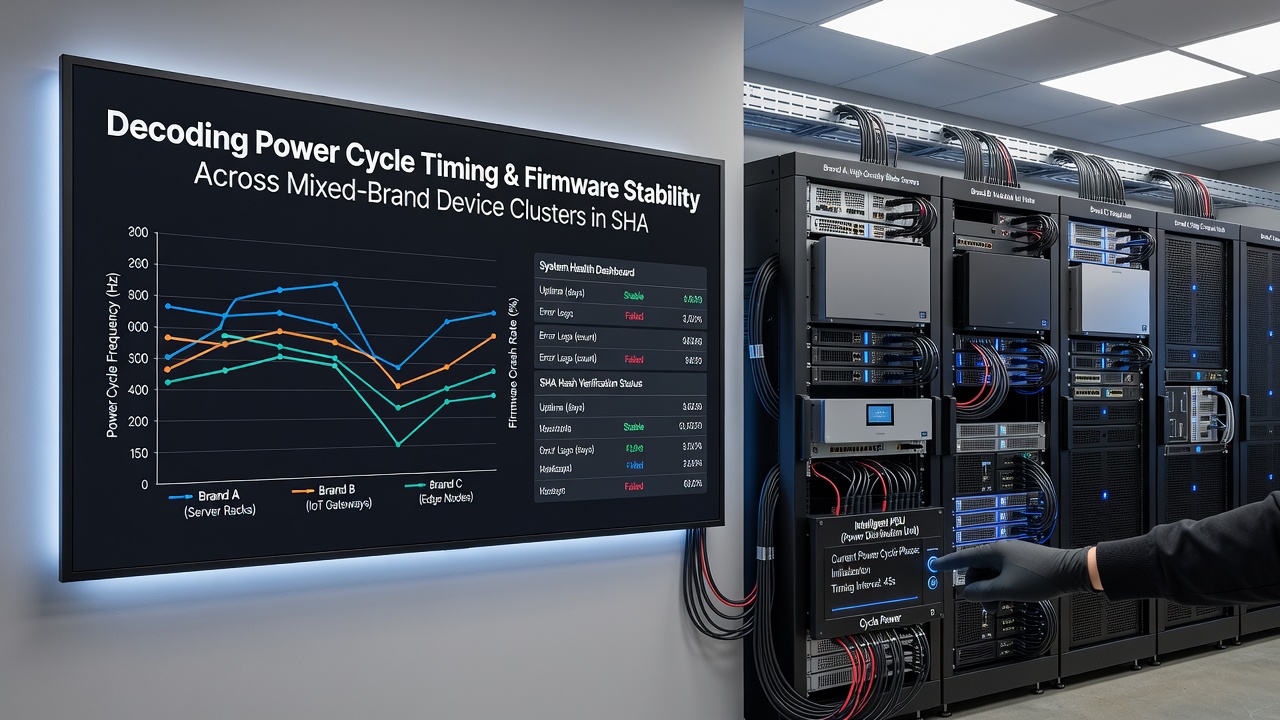
July 2026 updates to several popular IoT firmware branches introduced tighter tolerances around power-loss detection, tightening the acceptable window to between fifty-five and seventy-five seconds for full memory verification. Facilities that adopted these branches ahead of the general release reported a measurable drop in spontaneous reboots during peak occupancy periods. Those still running earlier branches continued to log checksum mismatches when residents triggered rapid on-off sequences via voice assistants.
Measurement Approaches and Data Sources
Facilities managers track cycle timing through smart plug APIs that timestamp voltage drop and restoration events at one-second resolution. Aggregating these timestamps against device syslog outputs produces correlation matrices that highlight which brands tolerate which intervals. A 2024 report published by the National Institute of Standards and Technology examined similar variables in laboratory testbeds and confirmed that timing variance above forty seconds increased the probability of partial firmware writes across heterogeneous hardware sets.
Additional context appears in an analysis released by the European Union Agency for Cybersecurity, which examined residential gateway clusters and found that staggered power events across brands sometimes prevented coordinated firmware rollbacks, leaving some devices on older revisions while neighbors advanced. Both studies stress the value of centralized logging rather than isolated device diagnostics when diagnosing stability issues.
Practical Adjustments in Shared Spaces
Technicians working in multi-tenant buildings have tested staggered power-up sequences using managed power distribution units. These units enforce minimum off periods before re-energizing specific outlets, allowing slower-recovering devices to complete memory checks before faster devices rejoin the network. The approach reduces simultaneous boot storms that can mask individual firmware faults.
Residents who install separate smart plugs per device cluster sometimes achieve similar results by scripting staggered delays through home-automation platforms. Logs from such installations show that consistent timing windows reduce the frequency of firmware-initiated safe-mode entries, though they do not eliminate the underlying need for vendor-specific update cadence alignment.
Conclusion
Power cycle timing interacts with firmware stability through memory-write windows, watchdog thresholds, and inter-brand heartbeat differences. Measurements from laboratory and field environments indicate that intervals between fifty-five and seventy-five seconds produce fewer anomalies across mixed-brand clusters than shorter or highly variable intervals. Facilities adopting centralized timing controls and recent firmware branches released around July 2026 continue to document lower rollback rates, while ongoing data collection refines the acceptable ranges for additional device combinations.