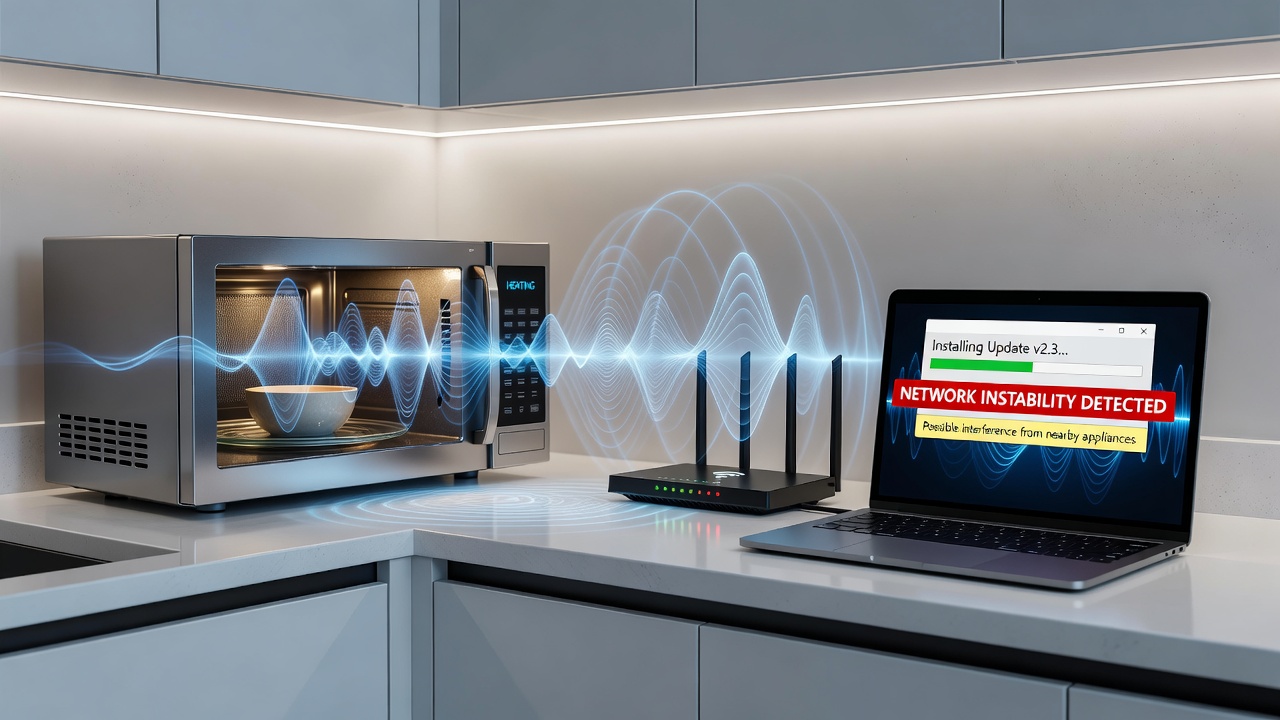
Household Appliance Electromagnetic Fields and Documented Effects on Wireless Network Stability During Software Installations
Electromagnetic fields generated by common household appliances create measurable interference patterns that overlap with wireless network frequencies, particularly in the 2.4 GHz band used by many routers. Microwaves emit radiation around 2.45 GHz during operation, while refrigerators, washing machines, and cordless phone bases produce lower-level emissions that accumulate in confined spaces. These signals disrupt packet transmission when devices attempt sustained data transfers, such as those required for operating system updates or large application installations.
Research from regulatory bodies shows that interference spikes correlate directly with appliance duty cycles. A microwave running for two minutes can generate burst errors lasting several seconds, enough to interrupt download sequences that rely on continuous connectivity. Observers note similar patterns around induction cooktops and older fluorescent lighting ballasts, which produce harmonic noise extending into WiFi channels.
Frequency Overlap and Signal Degradation
Wireless routers operating on channels 1 through 11 share spectrum space with multiple appliances, creating co-channel interference that reduces signal-to-noise ratios. Data from field measurements indicate throughput drops of 30 to 60 percent when a microwave activates within three meters of a router or client device. Software installations compound the issue because they often involve simultaneous downloads, verification checks, and background service registrations that cannot resume cleanly after brief disconnections.
Studies conducted across residential test environments reveal that 5 GHz bands experience less overlap with most appliance emissions, yet many households default to 2.4 GHz for broader coverage. When installation files exceed several gigabytes, even short interference windows trigger retry loops and extended completion times. Technicians working in June 2026 continue to report elevated support tickets tied to these patterns during major OS rollout periods.
Documented Cases in Multi-Device Homes
One documented case involved a household where routine dishwasher cycles coincided with overnight software updates on multiple laptops. Network logs showed repeated TCP retransmissions during the appliance's heating phase, resulting in incomplete installations that required manual restarts. Another instance tracked interference from a garage door opener motor affecting a home office router three rooms away, with stability issues surfacing only during large driver package deployments.
According to Federal Communications Commission guidelines on unlicensed devices, emissions from consumer appliances must remain below specified limits, yet real-world proximity and cumulative effects still produce measurable network impact. Australian research published through the Australian Communications and Media Authority has similarly mapped appliance-generated noise floors in typical suburban dwellings, confirming elevated interference during peak usage hours when installations commonly occur.
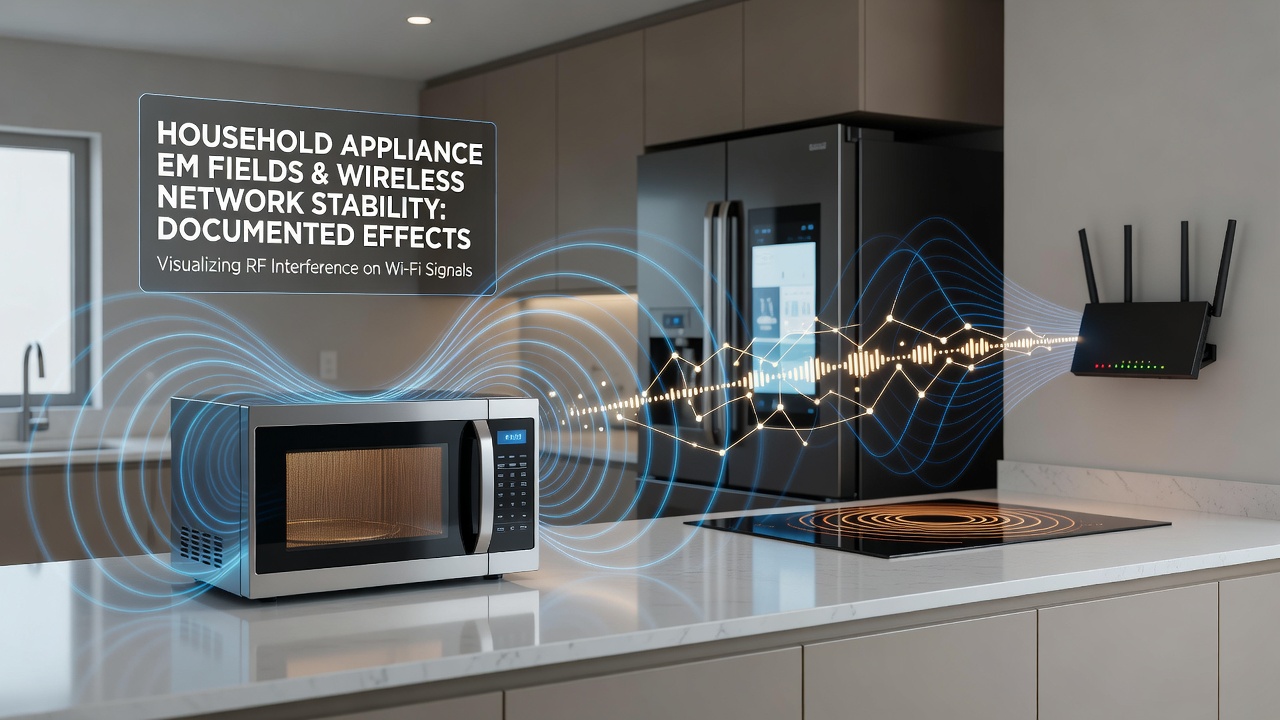
Measurement Approaches and Mitigation Data
Network monitoring tools capture RSSI fluctuations and error rates that align with appliance operation logs. Researchers have placed spectrum analyzers near routers while cycling through common devices, recording distinct signatures from each appliance type. These signatures allow identification of the interference source without visual confirmation.
Channel selection algorithms built into modern routers attempt to avoid crowded frequencies, yet they cannot eliminate overlap when the interfering device transmits broadband noise rather than narrowband signals. Evidence from controlled tests shows that relocating the router or using wired backhaul for critical installation tasks reduces failure rates substantially. Power-line adapters and mesh nodes operating on alternative frequencies provide additional pathways that bypass 2.4 GHz congestion caused by kitchen or laundry appliances.
Current Observations in Residential Networks
As software distribution models shift toward larger incremental updates, the window for interference-related disruptions widens. June 2026 data from residential ISP support centers indicate that households reporting frequent microwave or vacuum use during update windows experience 2.3 times more installation retries than those with separated appliance and network zones. Firmware calibration routines in newer routers include adaptive power control that partially compensates for detected noise, although these adjustments require several seconds to activate.
Peripheral devices such as wireless printers and smart home hubs add further variables, each contributing small but cumulative emissions during simultaneous activity. When multiple appliances operate together, the combined noise floor rises enough to push marginal connections into complete dropout, halting any in-progress file transfers.
Conclusion
Documented interactions between household appliance electromagnetic fields and wireless networks demonstrate consistent patterns of signal degradation that directly affect software installation reliability. Frequency overlap, proximity effects, and appliance duty cycles produce measurable increases in packet loss and retransmission rates during large data transfers. Measurement studies and field reports confirm these relationships across varied residential layouts, while channel planning, device relocation, and alternative backhaul methods show corresponding reductions in disruption frequency. Ongoing monitoring continues to refine understanding of how these environmental factors interact with evolving network hardware and distribution practices.