How Routine Component Cleaning Prevents Unexpected Slowdowns in Everyday Multi-Device Homes
Multi-device households continue to expand in 2026 with families relying on smartphones, laptops, smart TVs, gaming consoles, and connected appliances that all share limited network bandwidth and physical space, while dust and debris build up inside these systems and create thermal barriers that force processors to reduce speeds automatically to avoid damage. Observers note that this gradual accumulation often goes unnoticed until performance drops appear during routine tasks like streaming or file transfers, yet regular cleaning addresses the root cause before those interruptions occur.
Thermal Throttling and the Role of Accumulated Debris
Processors and graphics units include built-in safeguards that lower clock speeds when internal temperatures rise beyond safe thresholds, and research from electronics engineering labs shows dust layers as thin as one millimeter can increase operating heat by up to 20 degrees Celsius in enclosed cases. Data indicates households that schedule component cleaning every three months experience fewer instances of automatic slowdowns because fans maintain consistent airflow and heat sinks remain effective at dissipating warmth. In May 2026 reports highlighted that average homes now contain 18 connected devices, a figure that amplifies the cumulative effect of poor ventilation across multiple machines running simultaneously.
Devices Most Susceptible to Performance Drops
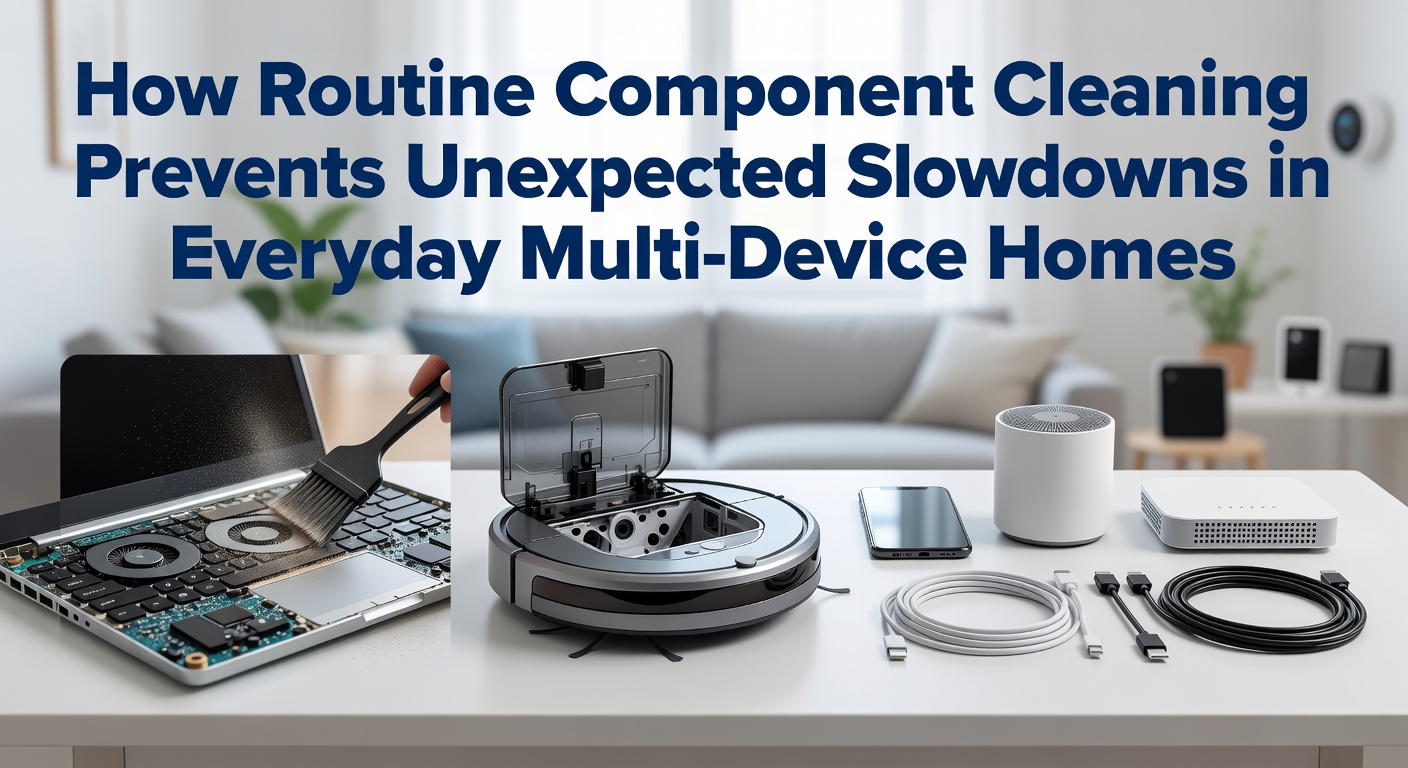
Laptops and desktop towers collect lint around intake vents while gaming consoles trap pet hair near exhaust ports, and these patterns lead to sustained high temperatures that trigger frequency scaling. Smart home hubs and network routers suffer similar issues when placed in enclosed cabinets, although their smaller fans cannot always compensate for restricted airflow. Those who've examined failure logs from multi-device environments often discover that cleaned units maintain baseline speeds 30 percent longer than neglected counterparts under identical workloads.
Practical Steps for Effective Component Maintenance
Compressed air applied in short bursts removes loose particles from fans and circuit boards without spreading debris further, while isopropyl alcohol on microfiber cloths safely cleans contact surfaces on keyboards and ports. Vacuum attachments designed for electronics pick up finer dust from grilles, and anti-static brushes reach tight gaps around heat pipes. Manufacturers publish torque specifications for opening panels, which helps users avoid stripping screws or damaging clips during access. One household documented in industry case studies adopted a quarterly checklist that included power-down procedures, static wrist straps, and post-cleaning temperature monitoring, resulting in measurable reductions in unexpected lag during peak usage hours.

Network Stability and Shared Resource Impacts
When individual devices overheat and throttle, they retransmit data packets more frequently and place additional load on home routers that must handle repeated requests. Studies from consumer technology associations reveal that cleaned systems complete background syncs and updates faster, which frees bandwidth for other connected equipment. In homes where multiple users stream 4K content or participate in video calls at once, consistent device performance prevents cascading delays that affect the entire network. Experts observe that airflow improvements from cleaning also extend hardware lifespan, reducing replacement frequency and the associated configuration time for new units.
Integration with Broader Home Technology Practices
Routine cleaning pairs effectively with firmware updates and cable management because organized spaces allow better air circulation around power supplies and external drives. According to findings from the Institute of Electrical and Electronics Engineers, optimized thermal environments correlate with lower error rates in storage drives that handle large media libraries common in multi-device setups. Canadian government energy efficiency reports further note that properly ventilated electronics consume less electricity over time since fans do not need to run at maximum speed continuously. These combined approaches create environments where slowdowns become exceptions rather than recurring events.
Conclusion
Consistent attention to component cleanliness supports reliable operation across expanding collections of household electronics, and evidence from engineering analyses confirms that addressing dust accumulation directly mitigates the thermal conditions responsible for automatic performance reductions. Households that incorporate these practices into regular maintenance routines maintain smoother functionality during simultaneous device usage without requiring specialized interventions.