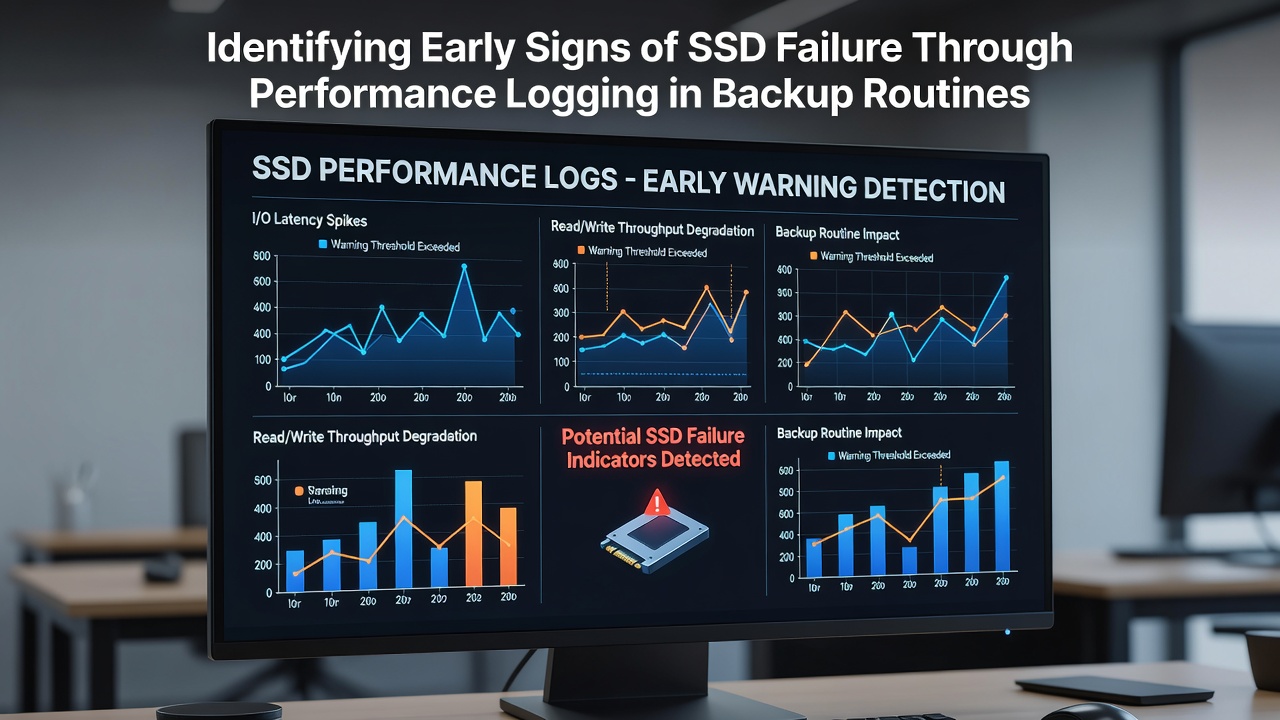
Identifying Early Signs of SSD Failure Through Performance Logging in Backup Routines
Organizations have long relied on solid state drives for their speed and reliability yet these components still exhibit predictable degradation patterns over time and performance logging during backup routines offers a practical method to detect issues before complete failure occurs.
Understanding SSD Wear Mechanisms
SSDs use NAND flash memory cells that support a finite number of write cycles and manufacturers typically rate drives with terabytes written metrics that help predict lifespan under normal conditions while observers note that actual endurance varies based on workload intensity and environmental factors.
Research indicates that early detection becomes possible when logs capture metrics such as latency spikes and error correction rates because these values tend to rise gradually before catastrophic errors appear and data from multiple enterprise deployments shows this progression often spans weeks or months.
Integrating Logging into Backup Processes
Backup software can be configured to record drive performance data at regular intervals and this approach captures sequential write speeds along with random access times during each session since backup operations stress the drive in consistent patterns that highlight emerging problems.
Administrators set thresholds for acceptable latency increases and program alerts to trigger when values exceed baseline averages established over initial monitoring periods and this method allows teams to schedule drive replacements during planned maintenance windows rather than reacting to sudden outages.
Key Metrics That Signal Potential Failure
Three primary indicators stand out in performance logs collected during backups and they include rising uncorrectable error rates, increasing average command completion times, and declining sustained write throughput while each metric provides distinct clues about drive health.
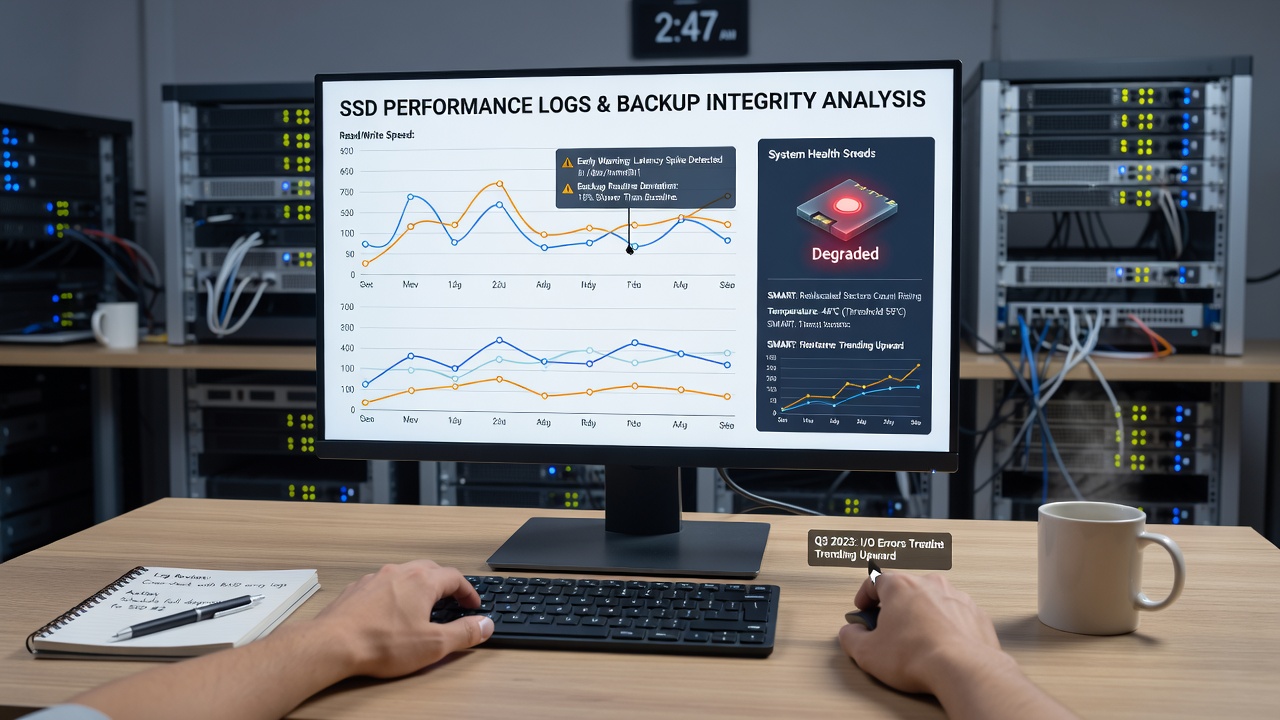
Studies from storage research groups reveal that uncorrectable errors often precede SMART warnings by several backup cycles and teams that track these numbers alongside temperature readings gain earlier visibility into wear acceleration caused by sustained high loads.
Implementation in Real World Environments
IT departments at mid sized firms have adopted automated scripts that pull SMART attributes and custom performance counters during nightly backups and one such deployment in a distributed office network flagged a drive showing 15 percent slower write speeds over a four week period which prompted preemptive replacement.
The process involves exporting log files to centralized monitoring platforms where trend analysis tools compare current values against historical baselines and alerts notify staff when deviations exceed set parameters while avoiding unnecessary interventions on normal fluctuations.
Supporting Data from Industry Reports
According to National Institute of Standards and Technology guidelines on storage security and reliability organizations benefit from continuous monitoring practices that include performance tracking because these methods reduce unplanned downtime associated with storage failures.
Additional findings from Canadian government technology assessments highlight similar patterns in SSD degradation across government workstations and the reports emphasize logging during high volume operations such as backups because these routines produce repeatable stress that exposes subtle changes in drive behavior.
Adjusting Routines for July 2026 Conditions
As of July 2026 updated firmware versions from major SSD manufacturers incorporate enhanced telemetry features that integrate directly with backup applications and these enhancements allow more granular logging of queue depths and power state transitions during data transfers.
Teams updating their monitoring scripts to capture these new data points gain additional context for interpreting performance shifts and the changes align with broader industry moves toward predictive maintenance models that use historical backup logs as primary input sources.
Conclusion
Performance logging within backup routines provides organizations with measurable indicators of SSD health through consistent collection of latency, error, and throughput data and this practice supports proactive maintenance schedules that minimize data loss risks while extending equipment usability across varied deployment scenarios.