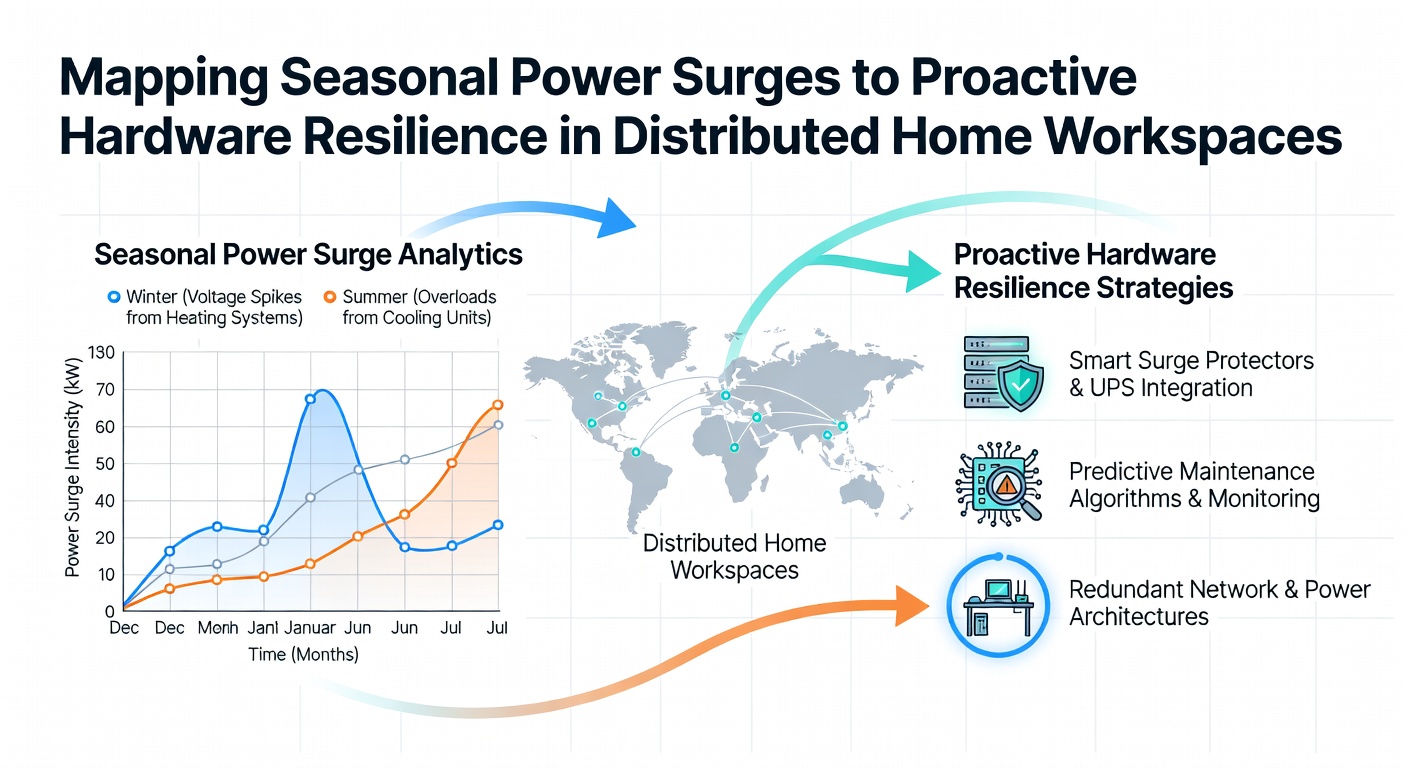
Mapping Seasonal Power Surges to Proactive Hardware Resilience in Distributed Home Workspaces
Distributed home workspaces have become standard fixtures across many regions since hybrid work models expanded, yet seasonal power surges continue to challenge hardware stability in ways that require systematic mapping and preparation. Power utilities record increased voltage fluctuations during summer cooling peaks and winter heating demands, patterns that directly affect routers, servers, and workstations operating outside centralized facilities. Observers note that these surges often coincide with extreme weather events, creating compounded risks for equipment that lacks dedicated protection layers.
Understanding Seasonal Patterns in Power Delivery
Utility data from multiple countries shows consistent spikes in demand that translate into surges when grids reach capacity limits, and May 2026 arrives with utilities already forecasting above-average summer loads in North America and parts of Europe due to prolonged heat projections. Researchers at institutions tracking grid behavior have documented how afternoon thunderstorms in spring and early summer months introduce rapid voltage drops followed by recovery surges that stress power supplies in home networking gear. Those who monitor residential circuits over multiple years find that winter months bring a different profile, with resistive heating systems drawing steady high loads that can mask underlying instability until a sudden appliance cycle triggers a transient spike.
Hardware Vulnerabilities in Distributed Setups
Workstations and network devices placed in home environments face exposure levels different from office buildings because residential wiring often lacks the same level of conditioning and redundancy. Studies conducted by energy research groups indicate that repeated exposure to surges above 10 percent of nominal voltage accelerates capacitor degradation in power supplies, while network interface cards suffer from cumulative electrostatic stress during recovery events. In one documented instance, a cluster of remote employees in a suburban area experienced simultaneous router failures during a July heatwave when air conditioning compressors cycled in coordination across several blocks, producing a synchronized load swing that exceeded local transformer tolerances.
Mapping Techniques for Early Detection
Effective mapping begins with logging voltage and current data at the point of use, and several open-source tools combined with smart plug hardware now allow users to build time-series records that reveal recurring surge windows. Analysts who aggregate such logs across multiple households have identified correlations between outdoor temperature thresholds and surge frequency, enabling predictive alerts before peak seasons arrive. Government agencies in Canada and Australia publish regional power quality reports that supply baseline statistics for comparison, helping organizations calibrate their own monitoring thresholds against broader grid performance metrics.
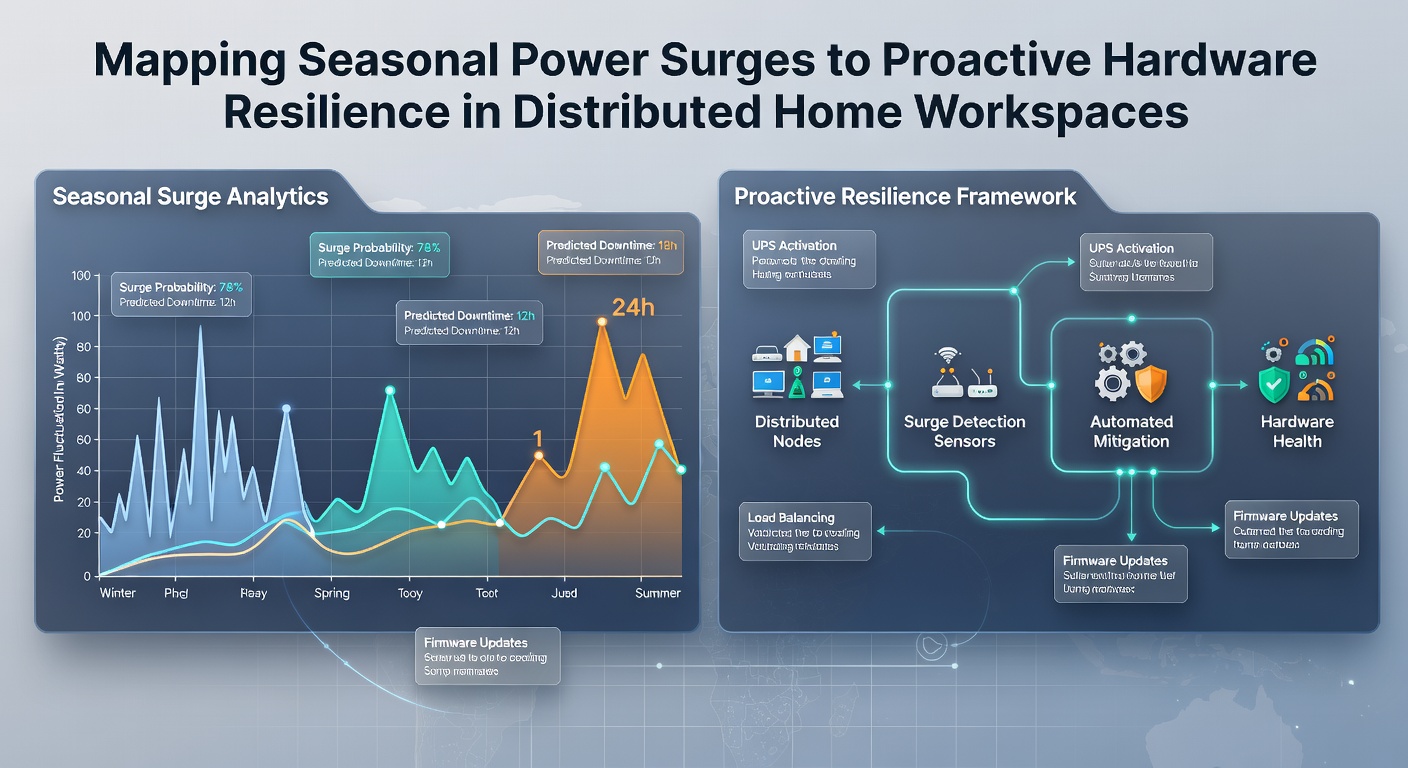
What's interesting is how these mapped datasets can feed directly into automated response systems that adjust power conditioning before surges fully develop, reducing the likelihood of component-level damage.
Building Proactive Resilience Measures
Hardware resilience strategies center on layered protection that includes uninterruptible power supplies sized for the combined draw of critical devices, surge protective devices rated for the expected transient energy levels, and firmware-level monitoring that flags abnormal voltage events for immediate review. Trade organizations focused on information technology infrastructure recommend annual testing of protective equipment because degradation occurs silently until a real event exposes weaknesses. Organizations that have implemented zone-based protection—separating sensitive storage arrays from general computing loads—report fewer correlated failures during seasonal events, according to internal metrics shared in industry forums.
Academic papers from electrical engineering departments emphasize the value of selecting components with wider input voltage tolerances when designing distributed workspaces, since these units maintain stable operation through the minor fluctuations that accompany daily grid adjustments. Integration of environmental sensors that track both temperature and humidity alongside electrical parameters adds another dimension, because heat combined with voltage stress accelerates failure rates in ways that isolated monitoring misses.
Implementation Across Geographic Contexts
Regional differences influence the most effective resilience approaches, with coastal areas facing higher lightning-related surge risks and inland regions contending more with load-induced fluctuations. Reports from the U.S. Department of Energy highlight grid modernization efforts that include advanced metering capable of capturing high-resolution disturbance data, information that distributed workspace operators can leverage when planning protective investments. European research initiatives have explored similar topics through collaborative projects that standardize surge characterization methods across member states, providing reference frameworks adaptable to home-scale deployments.
Those implementing these measures often start with a baseline audit of existing power paths, followed by phased additions of conditioning hardware timed to precede high-risk seasons. This sequencing allows performance validation under normal conditions before full seasonal loads arrive, and it minimizes disruption to ongoing work activities.
Conclusion
Mapping seasonal power surges against hardware performance data creates a foundation for targeted resilience actions that keep distributed home workspaces operational through predictable stress periods. Continued collection of localized measurements, combined with insights from utility reports and academic studies, supports refinements that reduce downtime and extend equipment lifespans across varying climates and grid conditions.