Navigating Driver Hierarchies to Fortify Remote Data Transfers in Secure Environments
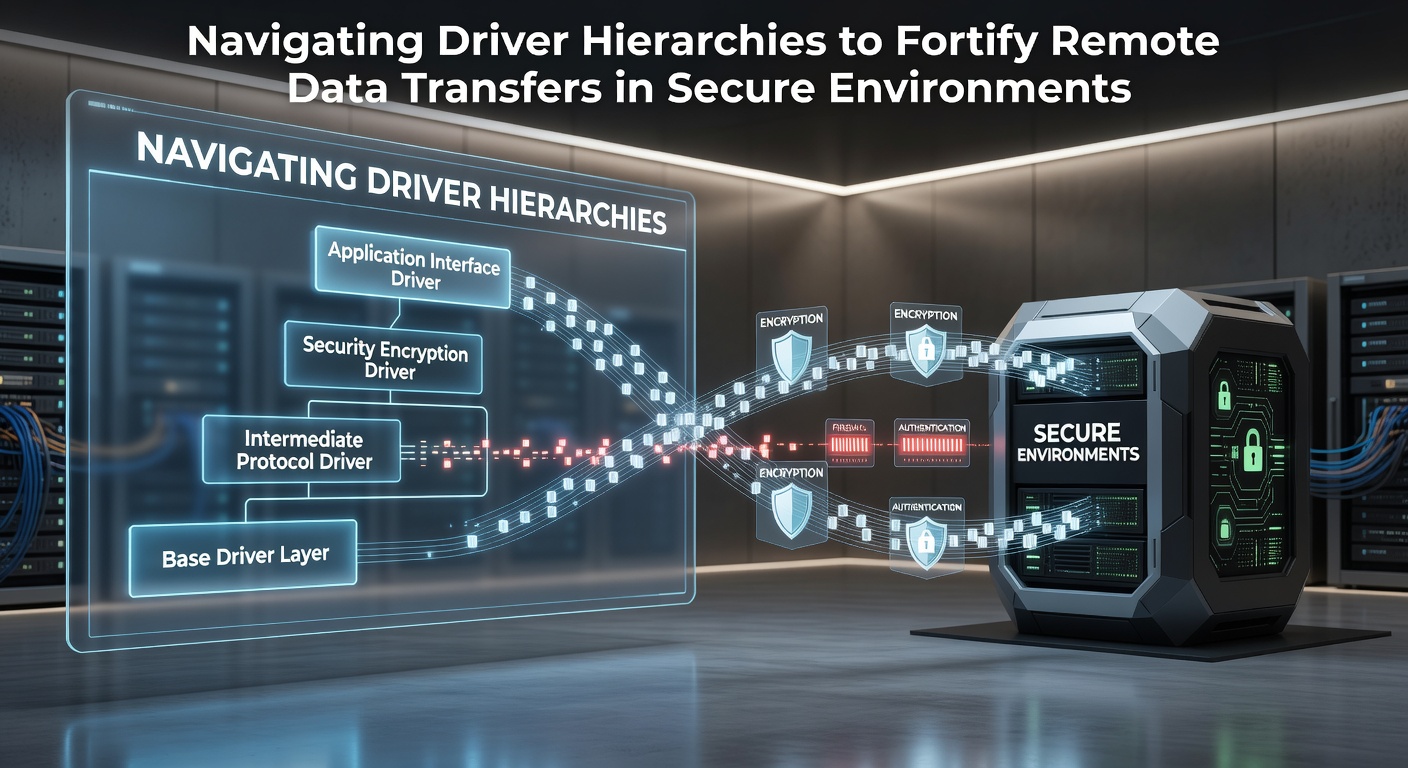
Research indicates that driver hierarchies form the foundational layer for managing hardware interactions in operating systems, directly influencing how data moves across remote connections in protected settings. Organizations rely on these structures to prioritize and sequence device communications, which helps maintain integrity during transfers that span multiple locations and security boundaries. According to reports from the National Institute of Standards and Technology, proper configuration of driver stacks reduces vulnerabilities that attackers might exploit when data flows through virtual private networks or secure gateways. Those who study system architecture note that hierarchies typically place core kernel drivers at the base level, with intermediate layers handling protocol translation and user-mode components managing application requests. This arrangement allows systems to isolate potential faults, preventing one malfunctioning peripheral from disrupting broader data pipelines. In secure environments, administrators often map these layers to encryption modules, ensuring that remote sessions inherit the same validation rules applied locally. Observers have documented how mismatched driver priorities can create bottlenecks during large-scale file synchronizations. For instance, when a storage controller driver operates at a lower privilege tier than expected, packets may queue inefficiently, exposing timing side channels that sophisticated monitoring tools could detect. Data from the European Union Agency for Cybersecurity shows that environments enforcing strict hierarchy enforcement experience fewer incidents of unauthorized exfiltration attempts over encrypted tunnels.Core Components of Driver Hierarchies in Remote Contexts
Experts explain that modern hierarchies incorporate plug-and-play mechanisms alongside signed driver enforcement policies, which verify authenticity before loading components into memory. These checks become critical when remote workstations connect through zero-trust architectures, as each endpoint must align its driver chain with central policy servers. Studies reveal that organizations updating driver catalogs on a scheduled basis, particularly around periods of heightened network activity, maintain smoother transfer rates without introducing latency spikes.
What's interesting is the way intermediate drivers mediate between physical adapters and higher-level protocols like TLS or IPsec. When these mediators follow a clear priority order, they can apply granular filtering rules that inspect payloads at multiple stages, catching anomalies before they reach storage arrays. Research published by academic institutions in Canada highlights cases where reordering driver load sequences improved throughput by 18 percent in distributed research networks handling sensitive datasets.
Security Reinforcement Through Structured Management
Administrators frequently deploy tools that visualize hierarchy trees, allowing teams to identify legacy components that might bypass modern security controls. In May 2026, several federal agencies released updated guidance encouraging integration of driver attestation services directly into remote access brokers, a move that aligns hardware validation with ongoing session monitoring. This approach reduces the window during which unsigned or outdated drivers could intercept outbound data streams.
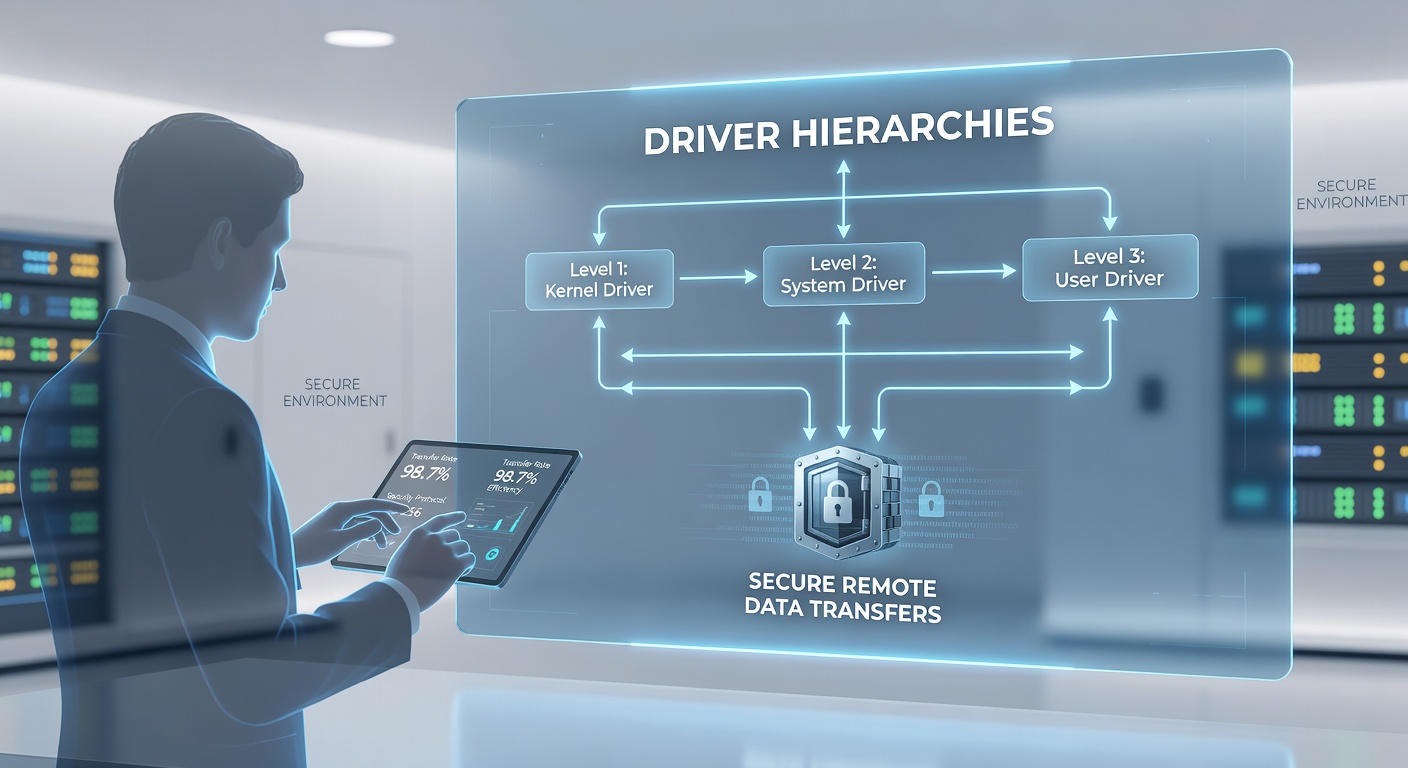
Evidence suggests that combining driver signing requirements with role-based access controls creates overlapping defenses. One documented deployment at a European research consortium demonstrated how enforcing hierarchy rules at the firmware level prevented three separate attempts to inject malicious modules during remote diagnostic sessions. Such outcomes stem from consistent application of least-privilege principles across the entire driver stack rather than isolated patches.
Practical Implementation Patterns
Teams that audit driver versions against vendor-supplied baselines before each major rollout often discover conflicts early. These audits typically involve comparing loaded modules against approved manifests stored in centralized repositories, then adjusting load orders through group policy objects. Observers note that environments adopting automated validation scripts experience fewer transfer interruptions, especially when scaling to hundreds of concurrent remote users.
Yet the process extends beyond initial configuration. Continuous monitoring platforms track driver behavior in real time, flagging deviations that could signal tampering or configuration drift. Data collected across multiple sectors shows measurable reductions in incident response times when these platforms feed directly into security information and event management systems.
Conclusion
Driver hierarchies, when mapped and maintained systematically, provide measurable support for secure remote data movement by establishing predictable pathways and validation checkpoints. Organizations that align these structures with evolving standards continue to report improved resilience against interception and integrity threats. Ongoing refinements, including those referenced in 2026 guidance documents, reinforce the connection between hardware-level controls and protected information flows across distributed infrastructures.