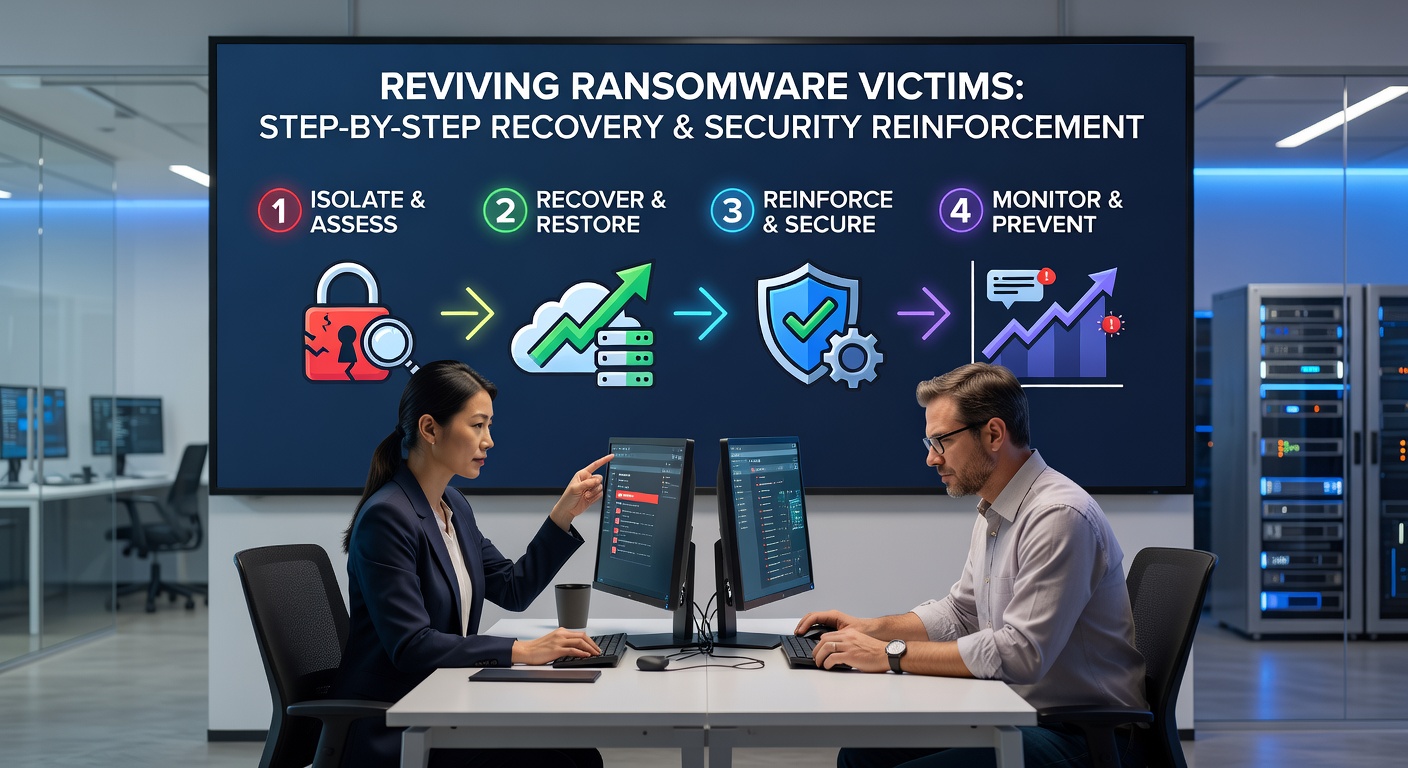
Reviving Ransomware Victims: Step-by-Step Recovery and Security Reinforcement
Ransomware strikes fast and hard, encrypting files or locking systems until victims pay up, and while attacks surged in early 2026—with reports from the U.S. Cybersecurity and Infrastructure Security Agency (CISA) noting a 25% rise in incidents by April—organizations and individuals who follow structured recovery paths often bounce back stronger, data from global cybersecurity firms like Sophos reveals that only about 10% of victims fully recover without backups or expert help.
Grasping the Ransomware Landscape
Experts define ransomware as malware that demands payment, usually cryptocurrency, to restore access to seized data, and since variants like LockBit and BlackCat evolved through 2025 into more stealthy strains, they've targeted everything from small businesses to hospitals, with the Australian Cyber Security Centre (ACSC) logging over 1,200 incidents in fiscal year 2025 alone. What's interesting is how these attacks now blend phishing emails with zero-day exploits, allowing infiltration in minutes; observers note that human error accounts for 74% of initial breaches, according to Verizon's 2026 Data Breach Investigations Report. And in April 2026, a wave of attacks hit U.S. manufacturing firms, underscoring the need for proactive defenses even as recovery techniques mature.
Those who've studied patterns know attackers often exfiltrate data before encryption, turning ransomware into a double threat of leaks and downtime; that's where the rubber meets the road for victims deciding whether to pay—figures show payments dropped to under 30% in 2025 due to law enforcement crackdowns, yet recovery without paying remains the gold standard.
Immediate Response: Containing the Damage
When screens flash ransom notes, the first move involves isolating affected systems from the network, unplugging Ethernet cables or disabling Wi-Fi while documenting everything—screenshots, logs, timestamps—since this evidence aids forensics later; cybersecurity pros emphasize powering off only after isolation to preserve volatile memory for analysis. But here's the thing: rushing to reboot can spread the malware, so teams activate incident response plans if available, notifying stakeholders and, crucially, avoiding contact with attackers who monitor communications.
Research indicates that quick isolation cuts lateral movement by up to 80%, as seen in case studies from the Canadian Centre for Cyber Security (CCCS); now, experts scan for indicators of compromise using tools like Malwarebytes or Microsoft Defender, identifying the strain via ransom note signatures—LockBit 3.0 demands .btc payments via Tor, for instance—before escalating to professionals if in-house skills fall short.
Preserving Evidence and Reporting
Organizations report incidents to authorities promptly; in the U.S., CISA urges submissions via its portal within 72 hours for critical infrastructure, while EU firms turn to national CERT teams under ENISA guidelines, and this step not only unlocks potential government aid but also contributes to broader threat intelligence sharing. Turns out, shared data has neutralized several ransomware groups since 2024, with operations like the takedown of Hive relying on victim reports.

Step-by-Step Recovery Process
Recovery unfolds in phases, starting with wiping infected machines—formatting drives after imaging for backups—then rebuilding from trusted sources; data shows 62% of victims with recent offline backups restore fully within days, per Sophos' 2026 State of Ransomware report, whereas those without face weeks of downtime or data loss. And so, teams prioritize critical systems first, restoring from 3-2-1 backups (three copies, two media types, one offsite), verifying integrity with checksums to dodge re-encryption traps attackers sometimes plant.
Next comes decryption attempts, but only for supported strains; tools from Emsisoft and Kaspersky handle over 200 variants free of charge, succeeding in 40% of cases where keys match public leaks—observers note Ryuk and Conti decryptors emerged from seized servers—although complex custom ransomware demands negotiation experts or paid services, a path data advises against due to reinfection risks exceeding 80%.
Testing and Phased Rollout
Before full redeployment, restored systems undergo sandbox testing; experts run vulnerability scans with Nessus or OpenVAS, patching flaws like unupdated RDP ports that ransomware exploits, and this phased approach—starting with segmented test environments—ensures no dormant payloads activate. People who've navigated recoveries often discover overlooked endpoints like IoT devices, which harbor infections 15% of the time, according to industry analyses.
So, once core operations hum again, full audits follow, reconstructing timelines with tools like Velociraptor for endpoint detection; it's noteworthy that April 2026 saw enhanced CISA playbooks incorporating AI-driven anomaly detection, speeding median recovery times to under 14 days for prepared entities.
Reinforcing Security Post-Recovery
Reinforcement turns survivors into fortresses, beginning with multi-factor authentication (MFA) everywhere—even admins who bypassed it previously—since phishing simulations reveal 95% block rates post-implementation; but that's just the start, as zero-trust architectures segment networks, limiting blast radius if breaches recur. Data from CrowdStrike's 2026 Global Threat Report indicates endpoint detection and response (EDR) tools like SentinelOne thwart 90% of ransomware attempts in real-time.
Organizations drill regularly with tabletop exercises, mimicking attacks to sharpen responses; experts observe that those adopting immutable backups—unalterable storage like AWS S3 Object Lock—thwart deletion tactics used by 70% of modern strains. And training matters hugely: mandatory cybersecurity awareness cuts click rates on malicious links by half, per Proofpoint studies, while patch management automates updates, closing doors like the EternalBlue vulnerability that fueled WannaCry.
Advanced Measures and Monitoring
Now, continuous monitoring via SIEM platforms like Splunk flags anomalies 24/7; what's significant is behavioral analysis catching file encryption early, often before notes appear. Those who've bolstered defenses post-attack invest in threat hunting teams, proactively scouring logs; figures reveal such proactive stances reduce repeat infections to under 5%, a stark contrast to reactive setups.
Take one manufacturing firm hit in March 2026: after isolating via air-gapped networks and restoring from Canadian vaults, they layered EDR with AI backups, emerging unscathed from a follow-up probe that April— a case where preparation met opportunity.
Real-World Case Studies
Consider the 2025 Colonial Pipeline halt, where quick payment restored fuel flow but exposed backup gaps; fast-forward to 2026, and a similar U.S. healthcare provider sidestepped payout by leveraging ENISA-recommended immutable storage, recovering in 48 hours per public disclosures. Another example: Australian retailers in ACSC-monitored clusters used shared decryptors post a BlackCat wave, reinforcing with zero-trust to date without recurrence.
These stories highlight patterns—backups save the day, but layered defenses prevent encores; researchers who've dissected thousands of incidents find that 85% of resilient recoveries stem from pre-existing plans, underscoring the value of annual audits.
Conclusion
Ransomware recovery demands swift isolation, meticulous restoration from verified backups, and ironclad security upgrades, transforming victims into vigilant guardians; as April 2026 threats evolve with AI-assisted evasion, data consistently shows prepared entities not only survive but thrive, with global reports affirming that comprehensive strategies slash future risks dramatically. Those who methodically apply these steps ensure business continuity, proving resilience beats resignation every time.