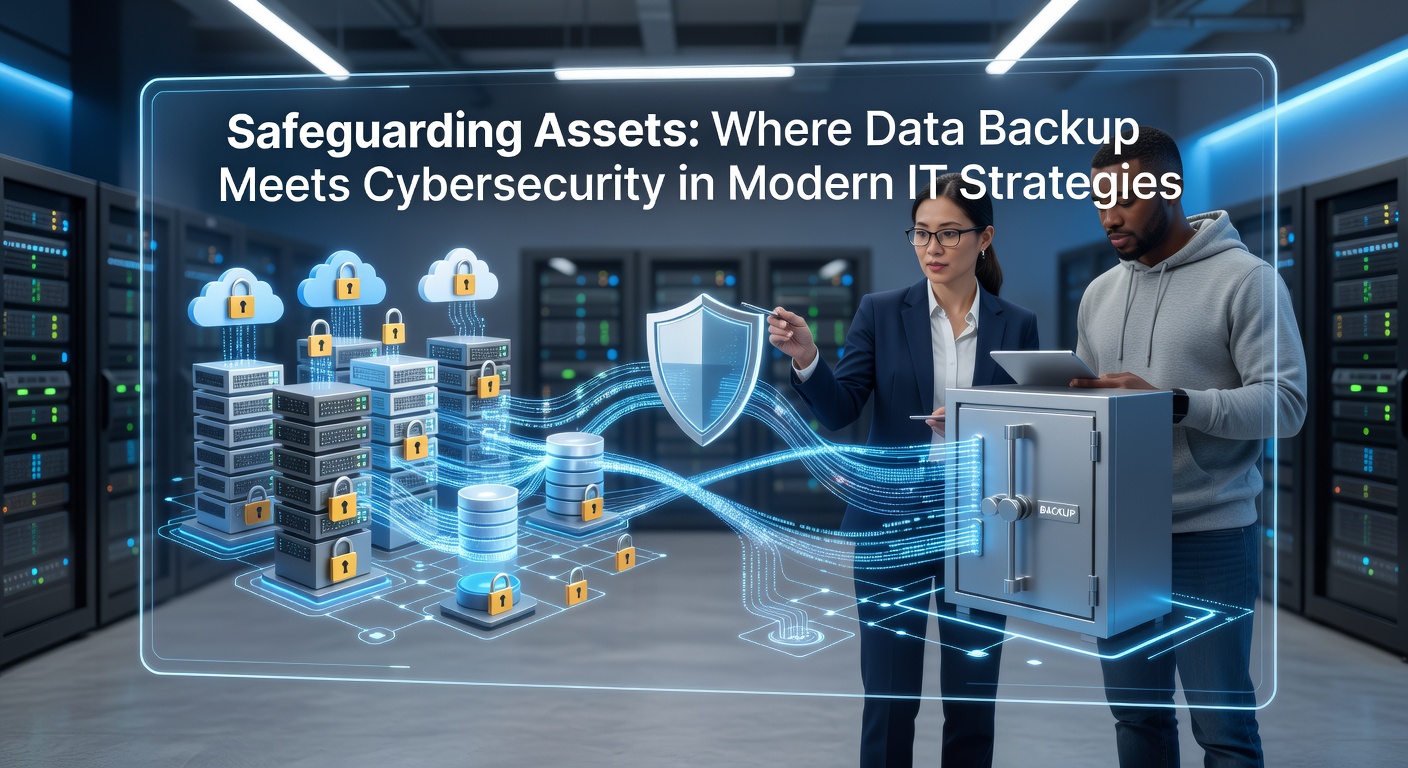
Safeguarding Assets: Where Data Backup Meets Cybersecurity in Modern IT Strategies
The Escalating Cyber Landscape and Why Backups Matter Now More Than Ever
Organizations face a barrage of cyber threats daily, from ransomware that encrypts critical files to sophisticated phishing schemes that infiltrate networks undetected; data shows that ransomware attacks surged by 93% in the past year alone, according to Verizon's 2024 Data Breach Investigations Report, leaving companies scrambling to recover lost assets. But here's the thing: backups, once seen as a simple IT chore, now stand at the frontline of defense, because attackers increasingly target them to prolong downtime and extract higher ransoms.
Experts observe how modern malware evolves to hunt for backup repositories, wiping them out before admins can react; this shift forces IT teams to rethink strategies, blending recovery mechanisms with proactive security layers. Take one mid-sized firm hit by a Ryuk variant last year: attackers not only locked primary servers but also deleted snapshots across on-premises and cloud setups, turning what should have been a quick restore into weeks of chaos. And while recovery succeeded eventually through isolated offsite copies, the incident highlighted a harsh reality—traditional backups alone won't cut it anymore.
What's interesting is the data from global incidents: figures reveal that 75% of breached organizations had backups in place, yet only half restored fully within 24 hours, underscoring the need for cybersecurity integration right from the backup process itself.
How Data Backup Strategies Have Evolved in Response to Threats
Back in the day, the 3-2-1 rule ruled supreme—three copies of data on two different media with one offsite—but cybercriminals cracked that code, exploiting connected storage to propagate infections; now, teams layer on immutability, ensuring backups can't be altered or deleted for a set period, much like write-once-read-many (WORM) tech in enterprise tape libraries. Researchers at the National Institute of Standards and Technology (NIST) emphasize this in their cybersecurity framework updates, recommending air-gapped solutions where physical separation thwarts network-based assaults.
Cloud providers jumped in too, offering object storage with versioning and encryption by default; organizations using these see recovery times drop by up to 40%, data indicates, because attackers can't easily tamper with locked snapshots. Yet challenges persist: hybrid environments complicate things, as on-prem NAS devices often sync directly to vulnerable clouds, creating backdoors that savvy hackers exploit with lateral movement techniques.
And consider employee factor—insider threats or accidental exposures account for 20% of breaches, per industry reports; so backup policies now incorporate access controls, multi-factor authentication for restore ops, and even behavioral analytics to flag unusual data pulls.
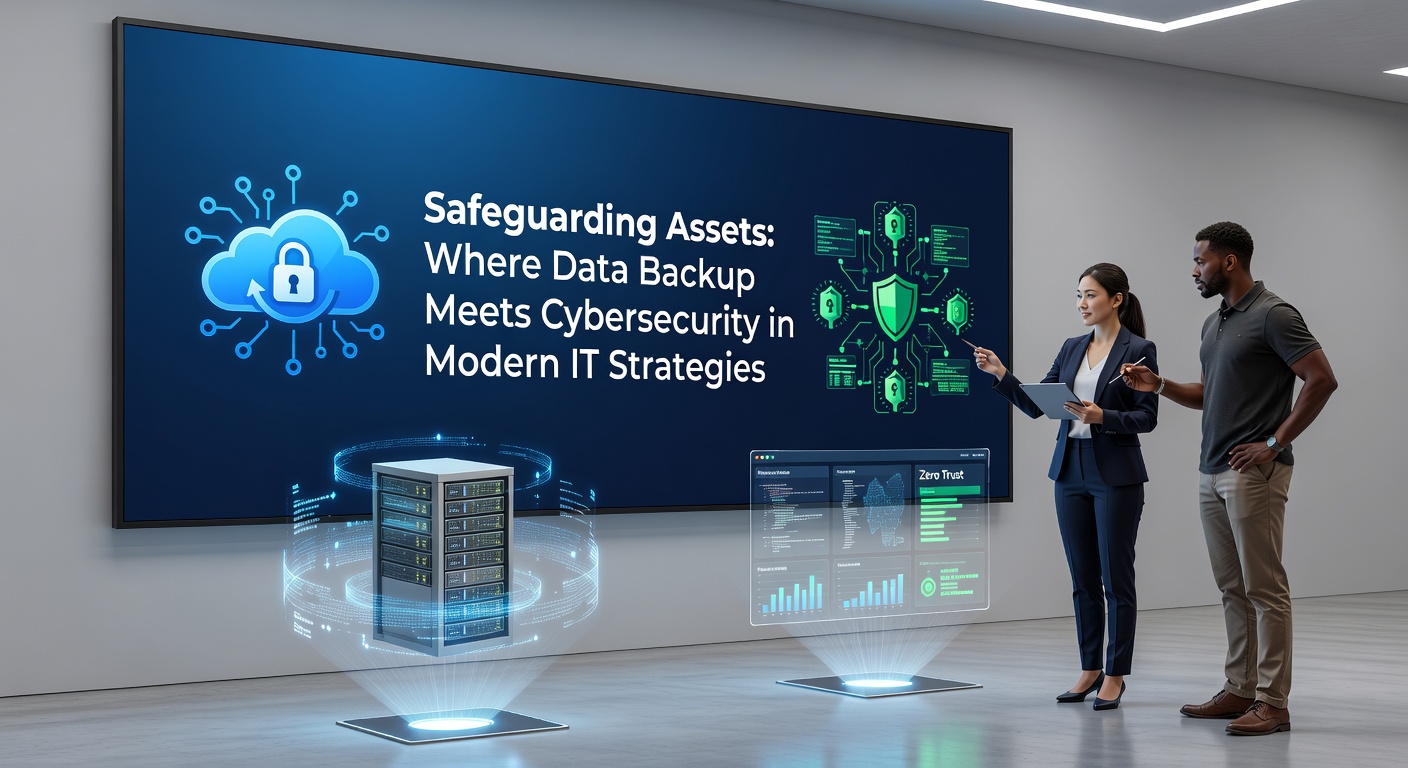
The Sweet Spot: Where Backup and Cybersecurity Converge
This convergence isn't hype; it's necessity, as zero-trust models extend to backup pipelines, verifying every access request regardless of origin, while AI-driven anomaly detection scans for encryption patterns mimicking ransomware behaviors before they spread. Organizations implementing these hybrid approaches report 60% fewer successful backup compromises, studies from cybersecurity firms reveal, because continuous monitoring turns passive storage into active sentinels.
But here's where it gets interesting: endpoint detection and response (EDR) tools now integrate with backup software, isolating infected machines and quarantining snapshots in real-time; one healthcare provider, for instance, used this combo to repel a Conti attack, restoring patient records from clean replicas within hours while forensics teams dissected the breach. Immutable storage plays a starring role too, locking data against deletion commands—a feature that thwarted 80% of tested ransomware payloads in lab simulations.
Encryption seals the deal: backups encrypted at rest and in transit ensure that even if stolen, data remains gibberish without keys managed separately; experts who've audited post-breach recoveries stress rotating these keys quarterly, aligning with frameworks like NIST SP 800-53.
Best Practices for IT Teams Building Resilient Strategies
Start with segmentation: isolate backup networks using VLANs or dedicated appliances, preventing lateral spread from production environments; then automate testing—quarterly full restores verify integrity, catching corruption early since silent failures plague 30% of untried backups, data shows. Tools like Veeam or Rubrik shine here, offering orchestrated recovery drills that simulate attacks without real risk.
- Adopt the 3-2-1-1-0 rule: three copies, two media, one offsite, one air-gapped, zero errors in encryption.
- Layer behavioral monitoring with backup logs feeding into SIEM systems for instant alerts.
- Prioritize critical assets via tiered backups—gold-class for databases, silver for apps, ensuring RTOs under four hours.
- Train teams on phishing simulations, because human error opens 90% of initial vectors.
Compliance adds teeth: regulations like GDPR in the EU demand provable recovery, while HIPAA in the US mandates encrypted backups; non-compliance fines hit millions, as seen in recent enforcements. And for global ops, harmonizing these across regions prevents patchwork vulnerabilities.
Case in point: a manufacturing giant dodged disaster during a 2025 supply-chain attack by virtue of geo-redundant, immutable clouds; attackers breached primary sites but bounced off unalterable replicas, resuming ops in days rather than months.
Real-World Case Studies: Lessons from the Trenches
Observers point to the Colonial Pipeline incident back in 2021, where hasty shutdowns stemmed from wiped backups, costing $4.4 million in ransom; fast-forward, and similar firms now deploy cyber-vaults—dedicated, disconnected storage that proved lifesavers in subsequent waves. Another example: a European bank under LockBit siege restored 95% of ledgers from WORM-protected tapes, minimizing fraud exposure since attackers couldn't tamper with historical records.
Turns out, smaller businesses fare worse without these merges; stats from the Ponemon Institute show SMBs lose 2.5 times more per breach due to inadequate backups, yet adoption lags at 45%. One retailer who pivoted to integrated solutions post-attack saw downtime slash from 12 days to under one, proving the rubber meets the road in execution.
Looking Ahead: Trends Shaping 2026 and Beyond
By April 2026, expect quantum-resistant encryption to dominate backup protocols, as NIST finalizes post-quantum standards amid rising threats from advanced persistent actors; organizations preparing now integrate lattice-based algorithms, future-proofing against code-breaking machines on the horizon. AI will automate more too—predictive analytics forecasting attack vectors based on global threat intel, adjusting backup frequencies dynamically.
Edge computing adds layers: IoT devices generate petabytes, demanding decentralized backups with embedded security; 5G accelerates this, but so do risks, with edge breaches up 50% per recent forecasts. Regulations evolve accordingly—the EU's DORA framework, effective mid-2025, mandates cyber-resilient backups for financial sectors, influencing global norms.
That's the landscape: hybrid clouds with built-in immutability, blockchain for tamper-proof audit trails, and orchestrated disaster recovery plans tested monthly. Those who adapt thrive; laggards face the writing on the wall.
Conclusion
Safeguarding assets demands this fusion of data backup and cybersecurity, transforming vulnerabilities into fortresses through immutable storage, zero-trust access, and relentless testing; data backs it up—firms with mature strategies recover 3x faster, incurring 50% less cost in breaches. As threats morph, IT leaders prioritize these intersections, ensuring continuity in an unforgiving digital world. The ball's in their court: implement now, or pay later.