The Silent Impact of Background Processes on Network Stability During Large-Scale Software Rollouts
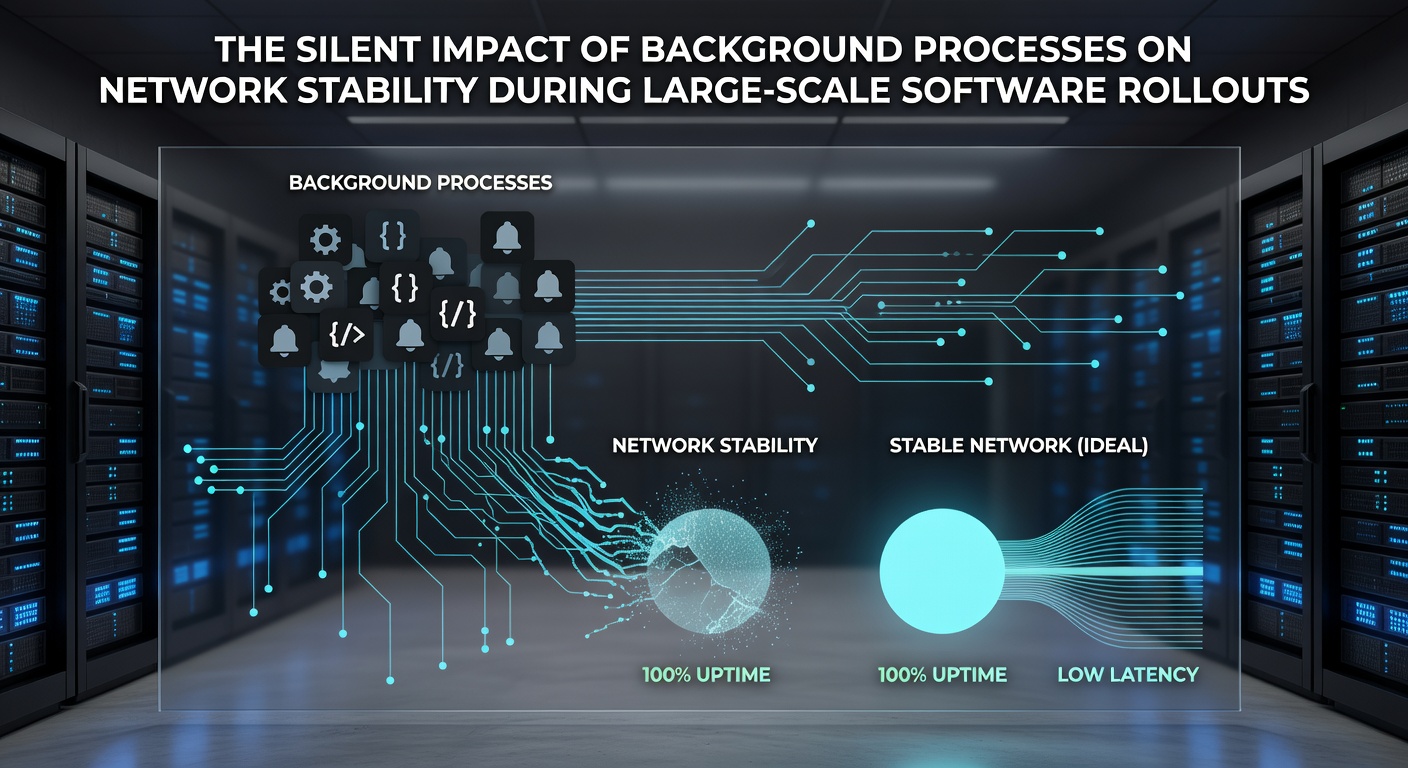
Background processes operate quietly in the background of enterprise systems yet they consume bandwidth and processing resources at scale when organizations push out major software updates across thousands of endpoints simultaneously. These tasks include automatic updates from third-party applications, system indexing services, antivirus scans, and cloud synchronization routines that activate without direct user intervention. Data from large IT environments shows that such processes can spike network utilization by 30 to 50 percent during peak rollout windows because each device initiates multiple concurrent connections to external servers.
How Background Activity Builds Unseen Pressure
Enterprises often schedule rollouts during off-peak hours to minimize disruption but background tasks ignore those calendars and begin their work as soon as devices detect available resources. One logistics company tracked traffic logs during a fleet-wide operating system deployment and discovered that 40 percent of the total bandwidth went to unrelated services such as software license checks and telemetry uploads rather than the intended update packages. Network engineers observed latency climbing from 12 milliseconds to over 180 milliseconds within the first hour even though the primary rollout traffic remained steady.
Researchers at the University of Melbourne documented similar patterns in a 2025 study of Australian healthcare networks where automated patch management coincided with routine backup synchronization. The combined load saturated wireless access points serving mobile workstations and forced several critical applications offline for nearly two hours. Those findings align with observations from Canadian federal agencies that reported comparable congestion when endpoint management tools ran alongside scheduled antivirus definition updates.
Monitoring Gaps That Allow Problems to Grow
Traditional network monitoring platforms focus on visible application traffic and often overlook the cumulative effect of dozens of low-priority processes running across hundreds of machines. Packet inspection tools may classify these flows as normal web traffic or unknown UDP streams which delays identification until performance metrics already show degradation. In May 2026 several financial institutions across the European Union experienced brief outages during a coordinated security suite rollout because background processes on employee laptops began pulling large language model updates from vendor clouds at the same moment.
ENISA published guidance earlier that year recommending deeper flow analysis and process-level telemetry to surface these hidden contributors. Organizations that implemented the recommendations reduced average latency spikes by 65 percent during subsequent deployments according to follow-up reports.
Resource Contention During Simultaneous Updates
When rollout tools push binary files to endpoints each device still maintains active connections for email clients, collaboration platforms, and cloud storage sync services. These background sessions compete for the same transmission control protocol windows and can trigger retransmissions that compound overall network load. A manufacturing firm in Germany measured a 22 percent increase in packet loss when its deployment coincided with end-of-month data synchronization jobs across 1,800 workstations.

Active directory replication and certificate authority checks also activate during large-scale changes and generate additional multicast traffic that older switches struggle to handle efficiently. Observers note that many mid-sized networks still operate with hardware purchased before widespread adoption of software-defined networking so these bursts expose capacity limits that standard capacity planning rarely accounts for.
Practical Steps Organizations Take to Reduce Interference
IT teams now apply throttling policies that limit background service bandwidth during declared maintenance windows and they use endpoint configuration profiles to defer non-critical updates until rollout completion. Several universities in the United Kingdom adopted centralized proxy servers that cache common update packages and thereby cut external traffic by more than half during campus-wide software migrations. Network segmentation further isolates rollout traffic onto dedicated virtual local area networks while production applications remain on separate paths.
Continuous monitoring combined with automated alerts for unusual process behavior helps teams intervene before congestion reaches critical thresholds. Data collected across multiple deployments indicates that early detection of background spikes allows administrators to pause or reschedule conflicting tasks without halting the primary rollout sequence.
Conclusion
Large-scale software rollouts expose the cumulative weight of background processes that normally stay invisible to end users and standard monitoring dashboards. Accurate measurement of all active flows together with targeted throttling and segmentation gives organizations the visibility needed to maintain stability while updates propagate. As enterprises continue expanding their device fleets and cloud dependencies these coordinated controls become essential components of any deployment strategy.