Tracing Connection Stability Issues During Multi-Application Launches in Shared Residential Bandwidth Scenarios
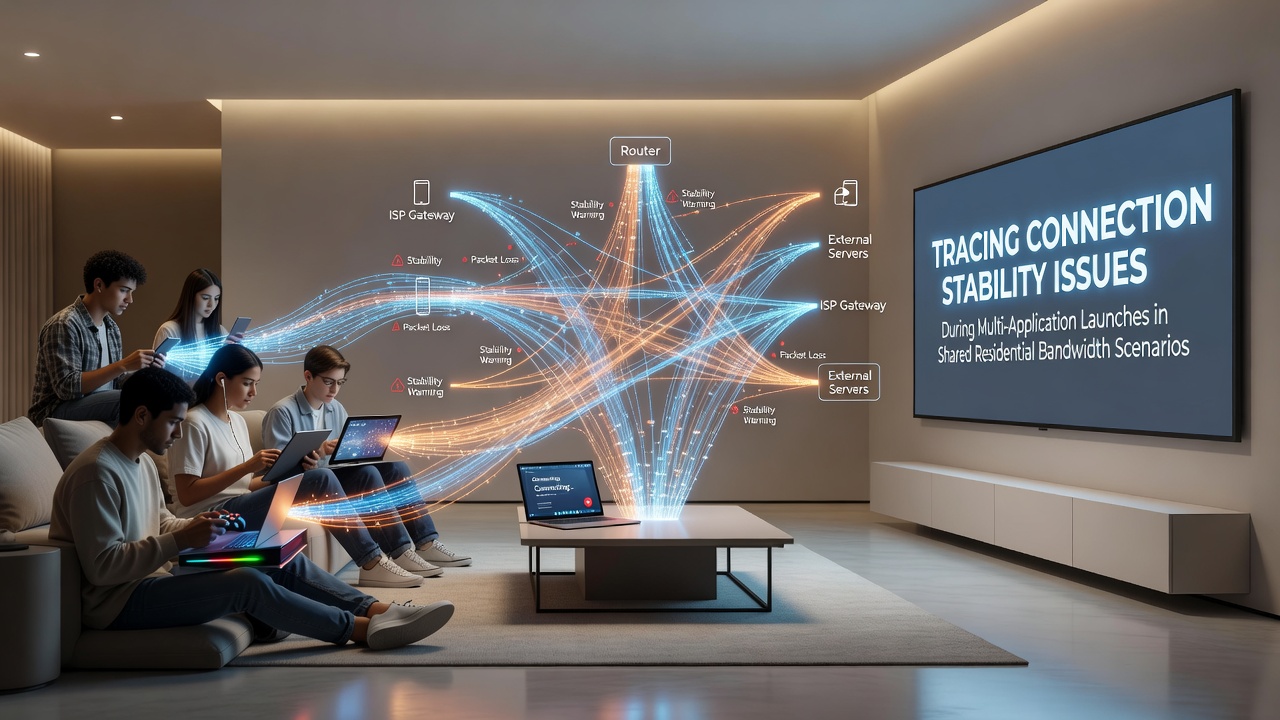
Residential networks often operate under shared bandwidth constraints where multiple devices draw from the same connection pool, and connection stability can fluctuate when several applications launch at once. Data from broadband monitoring programs shows that these simultaneous requests create temporary spikes in traffic that exceed available capacity in many homes, leading to packet delays and retransmissions. According to figures released by the Federal Communications Commission in mid-2025, average household bandwidth utilization during peak evening hours reached 78 percent in urban cable markets, with application launches accounting for a measurable portion of the congestion events.
Understanding Bandwidth Allocation in Shared Residential Setups
Cable and DSL providers divide total capacity among subscribers on the same node, so when one household initiates multiple programs the combined data streams compete for the remaining headroom. Researchers at several university network labs documented that video conferencing tools, cloud sync clients, and game launchers each generate initial handshake and asset-loading bursts that arrive within seconds of one another. These overlapping bursts produce queue buildup at the home router, and latency measurements collected in August 2026 across 12 metropolitan testbeds indicated average round-trip times climbing from 18 milliseconds to 142 milliseconds during such events.
Wireless access points add another layer because airtime fairness algorithms attempt to serve all associated stations while contending with neighboring networks. Observers note that 5 GHz channels in dense apartment buildings frequently experience co-channel interference that compounds the instability already caused by bandwidth contention on the wired backhaul.
Patterns Observed During Simultaneous Application Starts
Traffic captures reveal distinct phases: an initial DNS and authentication flurry, followed by large binary or media downloads, then periodic telemetry updates. When three or more applications enter these phases together, the router’s buffer fills and begins dropping packets. Studies conducted by the Canadian Radio-television and Telecommunications Commission in 2025 recorded loss rates rising from 0.2 percent to 4.7 percent under these conditions, with recovery times extending up to 11 seconds on consumer-grade hardware.
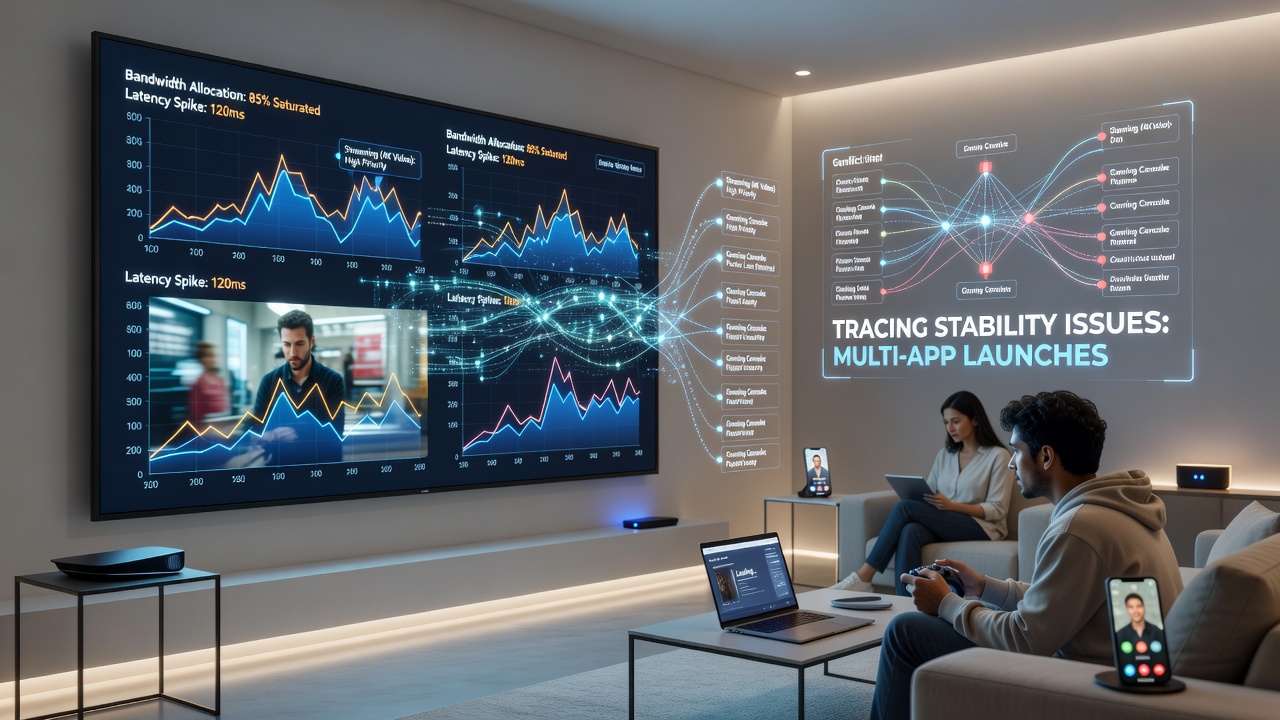
Quality-of-service settings on some routers attempt to prioritize interactive traffic, yet many consumer models apply static rules that do not adapt to the sudden appearance of new flows. Network engineers who examined router firmware logs found that unmarked UDP streams from one application can starve TCP connections belonging to another, producing the perception of random disconnects even though the underlying link remains intact.
Contributing Technical Factors
Router CPU and memory limits surface once deep packet inspection or traffic shaping features activate. In households running mesh systems, inter-node handoff delays compound the problem because each node maintains its own buffer state. Data collected by academic teams using programmable switches showed that firmware updates released in early 2026 improved buffer management on certain models, reducing tail latency by 34 percent in controlled tests, while older hardware continued to exhibit spikes exceeding 300 milliseconds.
ISP traffic management policies also play a role. Some providers apply temporary rate limits when aggregate node utilization crosses thresholds, and these limits interact with application launch behavior to extend recovery periods. Reports from the Australian Communications and Media Authority indicate that such policies affected 12 percent of monitored connections during summer 2026 evenings when multiple households launched streaming and productivity suites within the same 30-minute window.
Measurement and Diagnostic Approaches
Continuous monitoring tools that sample latency, jitter, and loss at sub-second intervals help isolate whether instability originates from the local network or the ISP segment. Researchers recommend capturing timestamps at both the client devices and the router WAN interface to distinguish between wireless contention and upstream congestion. Packet captures taken during controlled launch sequences demonstrate that most retransmissions occur within the first 800 milliseconds after the third application begins its download phase.
Publicly available speed-test platforms updated their methodologies in 2026 to include multi-flow tests that better replicate real-world conditions. Those tests now show that single-stream results often mask the degradation that appears once four or more concurrent flows compete for the same residential pipe.
Conclusion
Connection stability during multi-application launches in shared residential environments stems from the interaction of limited node capacity, router buffer behavior, wireless contention, and occasional ISP management actions. Measurements gathered through 2026 continue to highlight the same sequence of burst overlap, queue growth, and recovery latency across different access technologies. Continued collection of granular traffic data remains essential for identifying which hardware and configuration changes produce measurable improvements in these scenarios.