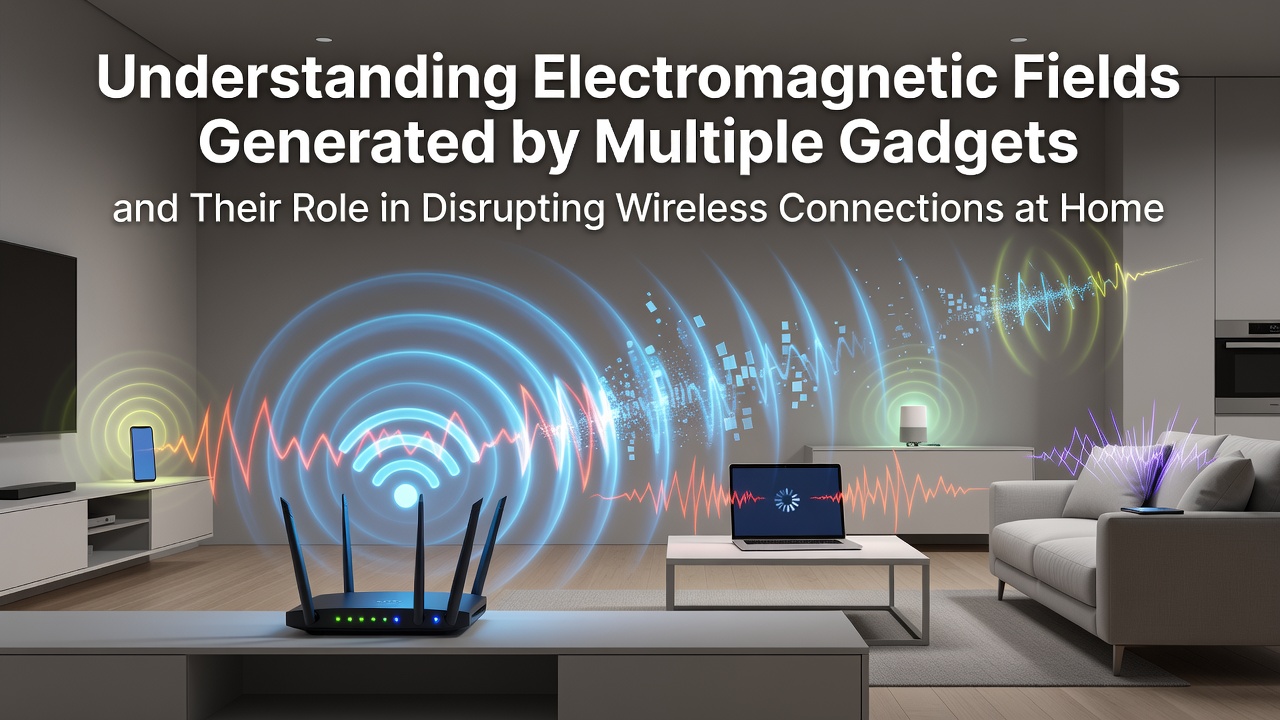
Understanding Electromagnetic Fields Generated by Multiple Gadgets and Their Role in Disrupting Wireless Connections at Home
Electromagnetic fields arise naturally from the operation of countless electronic devices found in modern residences, and observers note that these fields interact with wireless signals in measurable ways. Households now contain smartphones, tablets, smart speakers, wireless routers, microwaves, cordless phones, and an expanding array of Internet of Things sensors, each contributing to the ambient electromagnetic environment. Data collected by regulatory agencies shows that the cumulative output from these sources can overlap with the frequency bands used by Wi-Fi networks, particularly the 2.4 GHz range shared by many consumer devices.
Core Principles of Electromagnetic Fields in Residential Settings
Electromagnetic fields consist of electric and magnetic components that oscillate together as energy moves through space, and researchers have documented how these fields propagate from everyday appliances. When multiple gadgets operate simultaneously, their fields combine and create localized zones of higher intensity, especially near power sources or densely packed electronics. Studies conducted by the Federal Communications Commission indicate that signal strength decreases with distance yet remains sufficient to influence nearby receivers when several emitters occupy the same area.
Wireless connections rely on radio waves traveling within specific frequency allocations, while gadgets such as baby monitors and Bluetooth accessories often occupy overlapping portions of the spectrum. This overlap produces co-channel interference that manifests as reduced throughput or intermittent dropouts, conditions that network monitoring tools record in homes equipped with numerous connected devices.
Common Household Sources and Their Emission Patterns
Microwave ovens generate powerful fields during operation that extend several meters beyond the appliance casing, and measurements taken in typical kitchens reveal temporary spikes that coincide with Wi-Fi degradation on the 2.4 GHz band. Cordless telephones using DECT technology transmit continuously at levels that accumulate when multiple handsets remain active throughout the day. Smart home hubs and mesh network nodes add further layers because they maintain constant background communication with sensors and voice assistants.
As of June 2026, residential device counts continue to rise, with industry reports noting an average of 17 connected gadgets per household across North American markets. This increase correlates with greater reports of wireless instability in multi-story dwellings where signal paths must traverse several active emitters. Observers note that older wiring and metal-framed construction can reflect or channel these fields, concentrating their effects in particular rooms.
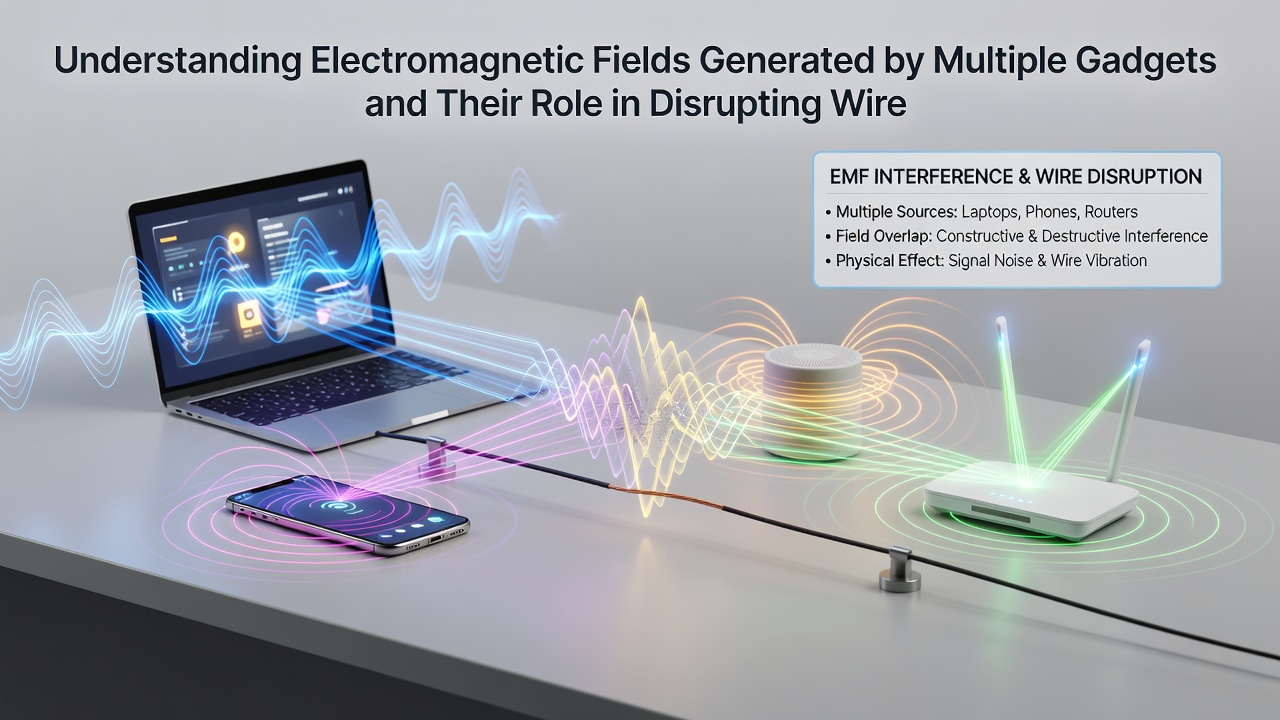
Mechanisms of Wireless Disruption
Interference occurs when electromagnetic energy from one device enters the receiver circuitry of another at sufficient amplitude to alter the intended signal. The 2.4 GHz band accommodates both Wi-Fi channels and numerous unlicensed devices, so simultaneous transmissions produce collisions that force retransmissions and lower effective data rates. Although the 5 GHz and 6 GHz bands experience less overlap with legacy gadgets, newer IoT products increasingly adopt these frequencies and create comparable conditions in dense deployments.
Researchers at institutions in Canada and Australia have recorded packet loss rates rising sharply once more than eight active 2.4 GHz emitters occupy a single 100-square-meter space. The Australian Communications and Media Authority publishes guidelines that detail how proper channel selection and physical separation can reduce measurable interference without requiring hardware replacement. Signal analyzers used during these studies reveal that brief high-power bursts from devices such as wireless cameras produce the most noticeable disruptions because they occupy wide bandwidths for short durations.
Measurement Approaches and Observed Patterns
Professionals employ spectrum analyzers and field strength meters to map electromagnetic activity across living spaces, generating heatmaps that identify zones where multiple sources converge. These tools capture both continuous emissions from routers and intermittent spikes from appliances, allowing precise identification of contributors to connectivity problems. Longitudinal data collected over several months shows that evening hours, when streaming devices and gaming consoles reach peak usage, coincide with the highest interference readings.
Placement strategies documented in technical literature demonstrate that elevating routers away from clusters of other electronics and selecting non-overlapping channels measurably improves link stability. Homes that incorporate power-line communication adapters sometimes experience additional electromagnetic noise traveling along electrical circuits, an effect quantified in field trials conducted across European residential test sites.
Conclusion
Electromagnetic fields produced by household gadgets interact with wireless infrastructure through well-understood physical processes, and accumulated evidence from regulatory bodies and academic measurements confirms their role in connectivity variability. Continued growth in device numbers, documented through June 2026, underscores the importance of spectrum management techniques that account for the combined emissions present in contemporary living environments. Accurate assessment remains grounded in direct measurement and adherence to established frequency allocation standards.