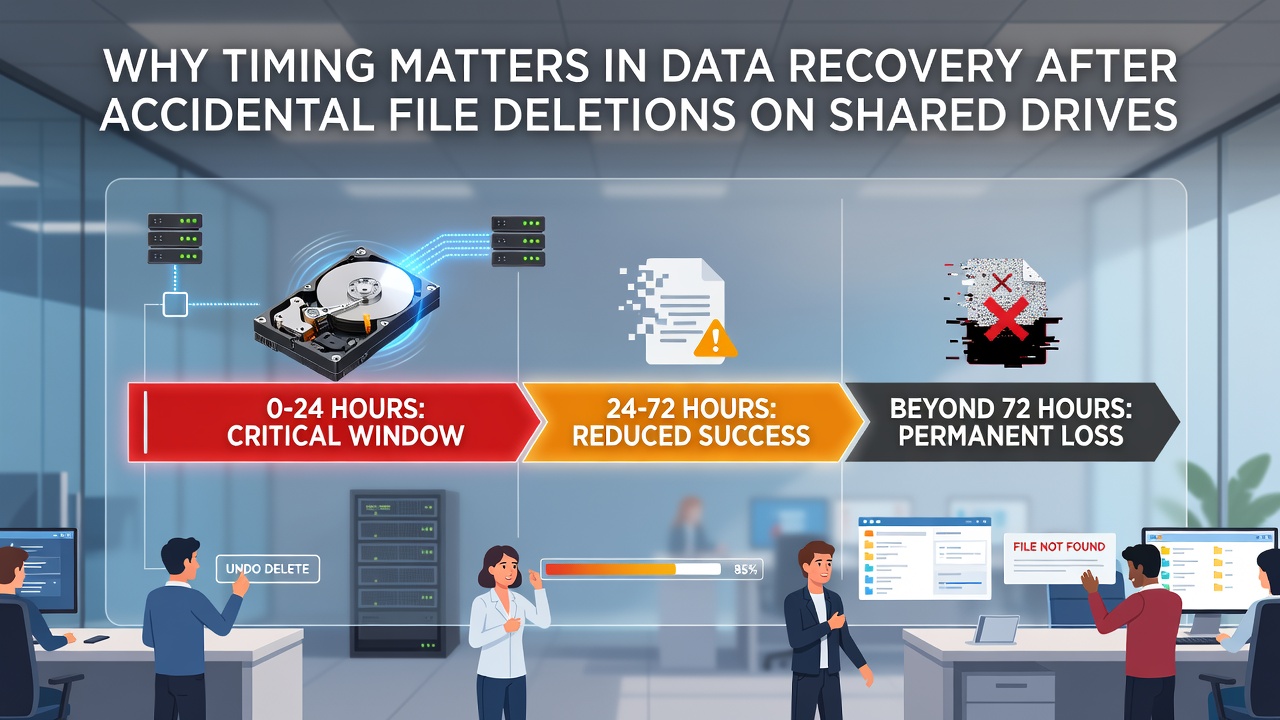
Why Timing Matters in Data Recovery After Accidental File Deletions on Shared Drives
Shared drives operate under constant multi-user access patterns that compress the window for successful data recovery after accidental deletions, and file systems mark space as available immediately while the underlying data persists until new writes occur. Researchers at various institutions have documented how network file protocols such as SMB and NFS allocate blocks based on demand from all connected clients rather than a single workstation, which accelerates overwriting compared with local storage.
File System Mechanics on Network Shares
When a user deletes a file from a shared volume the operating system updates the file allocation table or inode pointers to release the clusters, yet the actual bytes remain on disk until the system reassigns those clusters to incoming data from any participant on the network. Studies of NTFS and ext4 volumes in enterprise environments show that deletion metadata updates propagate across the share within seconds, but the physical blocks stay intact until subsequent writes from other users fill the free space pool. Observers note that this behavior differs markedly from single-user desktops where activity remains sporadic, and the shared environment introduces continuous background processes including synchronization services, backup agents, and collaborative edits that compete for the same storage blocks.
Impact of Concurrent User Activity
Multiple simultaneous connections raise the probability that newly freed clusters receive fresh data within minutes rather than hours or days, and logs from large-scale deployments reveal peak overwrite rates during business hours when teams access project folders together. Data from monitoring tools indicates that a shared drive handling 50 or more active sessions can overwrite 30 percent of recently deleted space in under two hours, whereas the same drive with minimal concurrent use retains recoverable fragments much longer. This pattern holds across both on-premises NAS appliances and cloud-hosted file services that emulate shared drives through virtual volumes.
Recovery Windows and Technical Constraints
Specialized recovery utilities scan unallocated space for file signatures and reconstruct directory structures before new writes destroy those signatures, yet each additional write operation reduces the chance of locating complete contiguous blocks. Experts have observed that attempts performed within the first 15 minutes after deletion on active shares succeed at rates above 70 percent in controlled tests, while delays beyond four hours drop success below 20 percent when user traffic remains steady. Software that relies on journal parsing or shadow copies offers additional avenues, although those mechanisms also face limits once the journal wraps or snapshots age out according to retention policies.
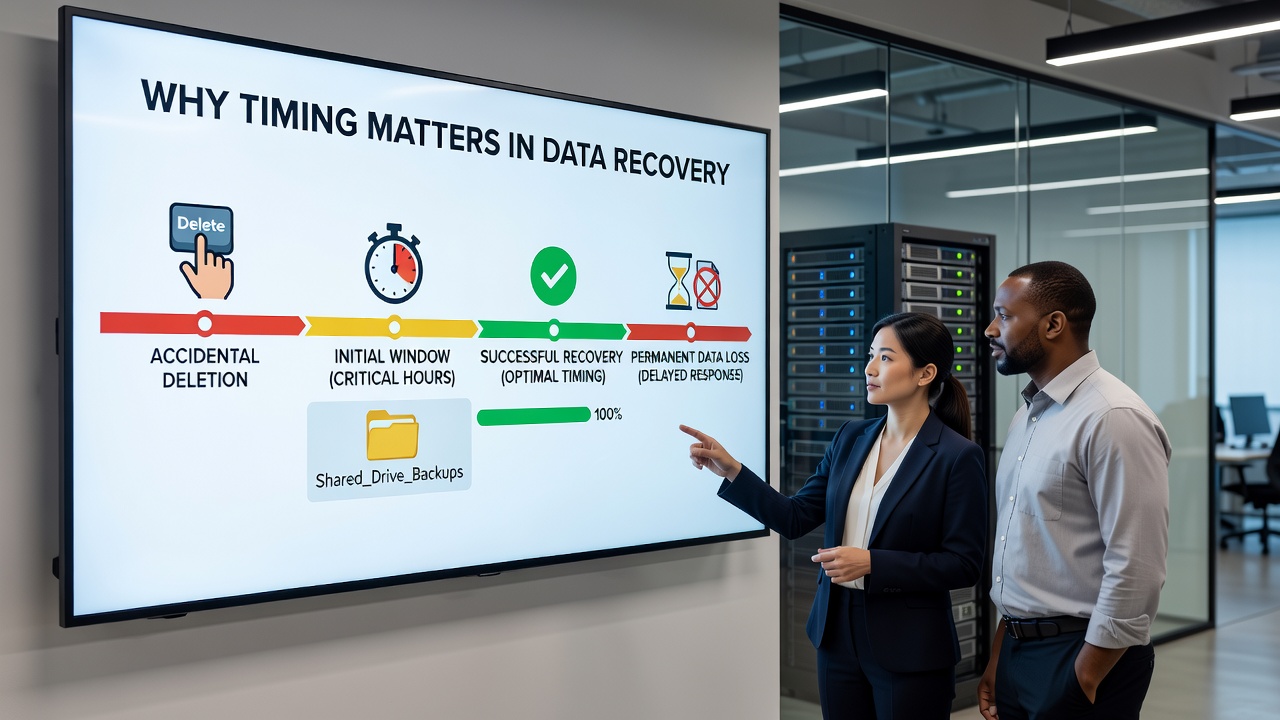
Network latency and caching layers add further variables because clients may hold temporary copies that flush at unpredictable intervals, and administrators who intervene quickly can sometimes suspend non-critical services to slow the rate of new allocations. In August 2026 several organizations reported deploying automated alerts that notify IT teams within seconds of mass deletion events on shared volumes, allowing immediate isolation of the affected directories before routine background tasks resume.
Role of Snapshots and Versioning
Many shared drive implementations maintain periodic snapshots that capture point-in-time states, and these copies remain accessible even after the original files disappear from the live file system. Administrators configure snapshot intervals ranging from every five minutes on high-value volumes to hourly on general-purpose shares, yet the interval itself determines how much work users lose between the last snapshot and the deletion event. Research indicates that combining frequent snapshots with rapid recovery workflows reduces overall data loss, although snapshot storage itself consumes capacity and eventually overwrites older versions when the allocated snapshot pool fills.
Practical Response Sequences
Teams that treat deletion incidents as time-critical events follow a standard sequence of disconnecting unnecessary clients, halting automated processes that write to the volume, and launching recovery scans from a separate workstation to avoid further writes. Documentation from industry reports shows that organizations maintaining documented incident playbooks restore more files within the critical first hour than those relying on ad-hoc responses. NIST guidelines on media handling emphasize documenting the exact moment of discovery because that timestamp guides decisions about whether to attempt in-place recovery or fall back to backups.
Conclusion
Timing directly governs the feasibility of recovering deleted files from shared drives because concurrent access accelerates block reuse across the entire volume. Organizations that implement monitoring, rapid isolation procedures, and layered snapshot strategies maintain higher recovery rates regardless of the specific file system or hardware in use. Data from multiple deployments confirms that the interval between deletion and first recovery attempt remains the dominant variable controlling outcomes.